Not long ago, there was no such thing as an independent golf shop. There were big box brands and pro shops at golf courses, but nothing in between. As menswear appreciators took up the game, the golf clothing landscape grew in an incredible way. Some might even say we are in the golden age of indie golf menswear. It's a natural evolution for golf clothing to become more nuanced. That was certainly the inspiration for Quiet Golf, which has quickly become an emerging voice with a devoted following.
As the game grows and new perspectives enter the new voices in golf help to refine the experience for everyone. The ephemera of the game is refined and the rising tide lifts all boats.

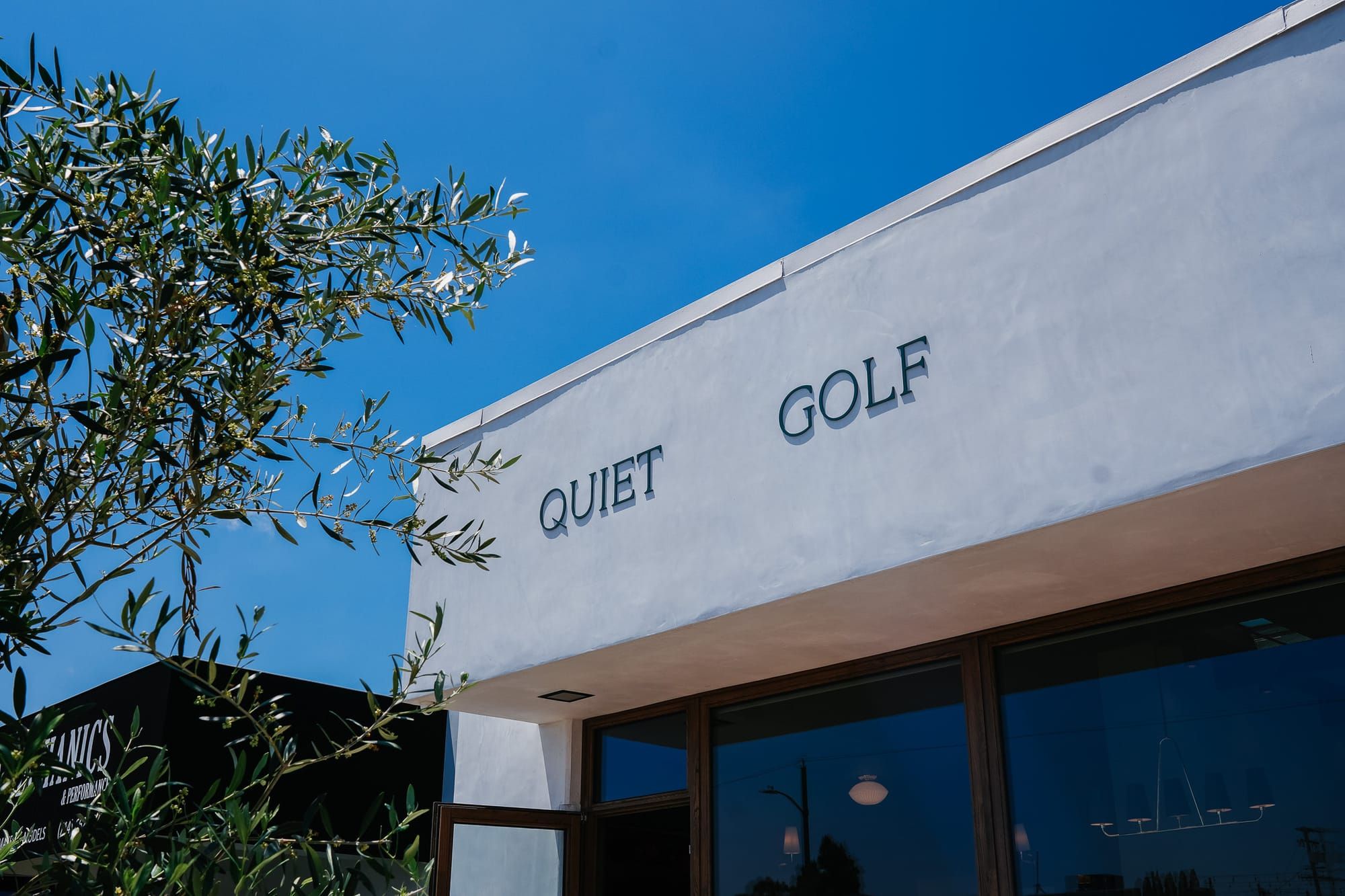
The Quiet Golf store sits opposite a thriving enclave of interesting small businesses in Orange County's Costa Mesa. It gleams in Southern California sunlight with its white stucco exterior, and the external Quiet Golf sign makes it very clear this is a different type of golf shop.
Christion Lennon launched Museum of Peace & Quiet in 2019, grounded in muted palettes and minimalist design. Quiet Golf followed in 2021, co-founded with Raul and Diego Diaz, carrying that same restrained sensibility into golf.
“Golf doesn’t move fast,” Diaz said. “It doesn’t really care about any of that.”
He paused.
“There’s something honest about it. You can’t fake it, and you can’t rush it. That was new for us.”
“What felt missing to us was restraint. Not just visually, but in how the game is approached.”
The product hadn’t kept up.
“There are some of the most beautiful, intentional spaces in golf. The courses, the clubhouses, the people who maintain them. There’s real craft there. But the product didn’t always match.”
“It’s a point of view more than anything. Golf as something you step into to disconnect, to reset. Less performance, more presence.”
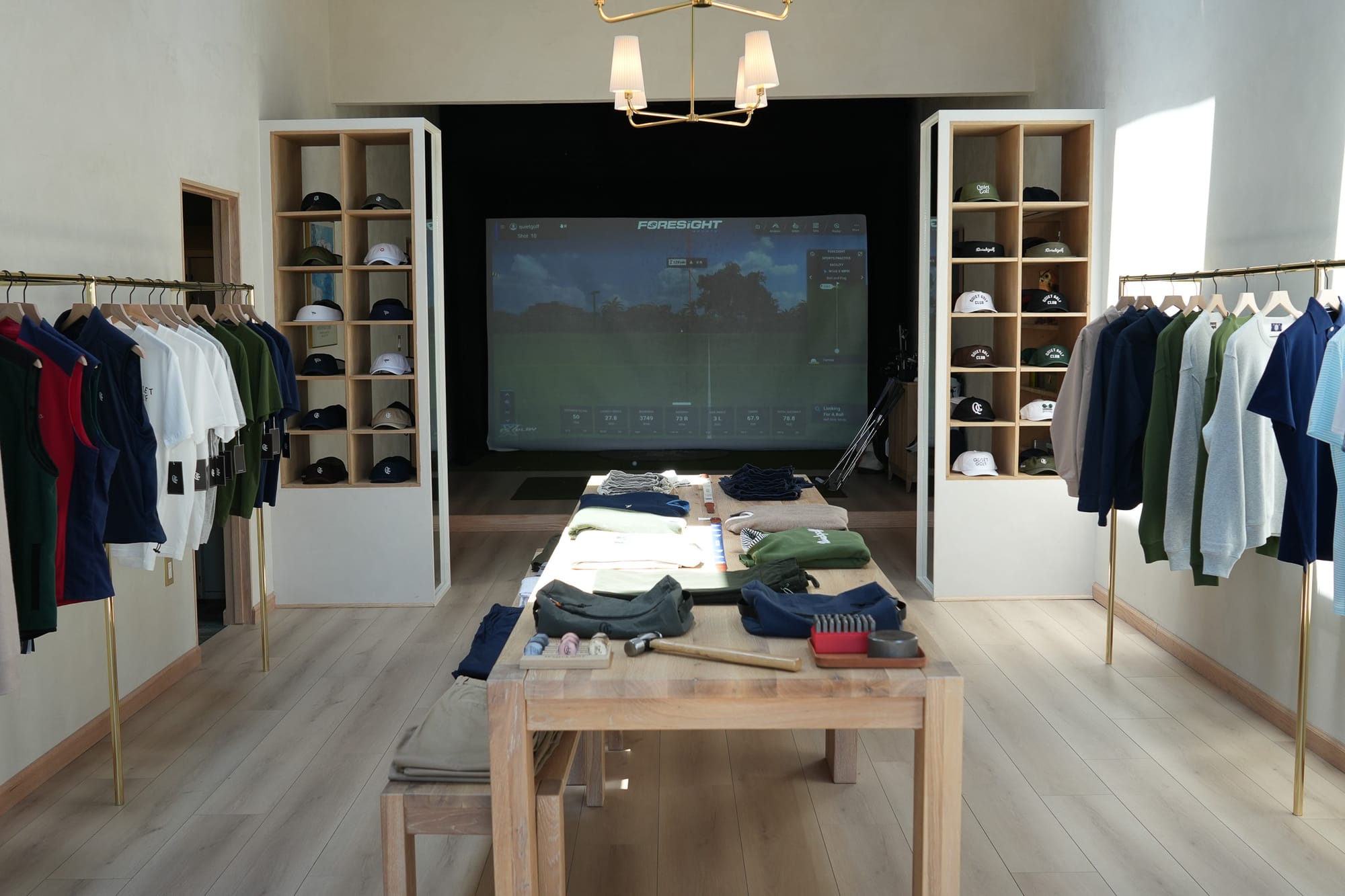
Quiet Golf opened its first shop in Costa Mesa in 2023. It doesn’t feel like a store so much as a place someone built for themselves and decided to leave the door open.
Golf has always had rooms like this — pro shops that doubled as social rooms, lockers that held more stories than equipment, places where the line between sport and culture got usefully blurry. Quiet Golf seems to understand that those rooms were always part of the game.
“Retail for us is less about transactions and more about context,” Lennon said. “We wanted a physical space where people could understand the brand without explanation. We’ll continue to invest in spaces like that, but it’ll be intentional. Not about scale for the sake of it.”
It’s a reasonable thing to say. It also happens to be exactly what a brand that just took outside investment would say. Whether Quiet Golf can hold that line is a different question — one the store, at least, makes you want to believe they can answer.
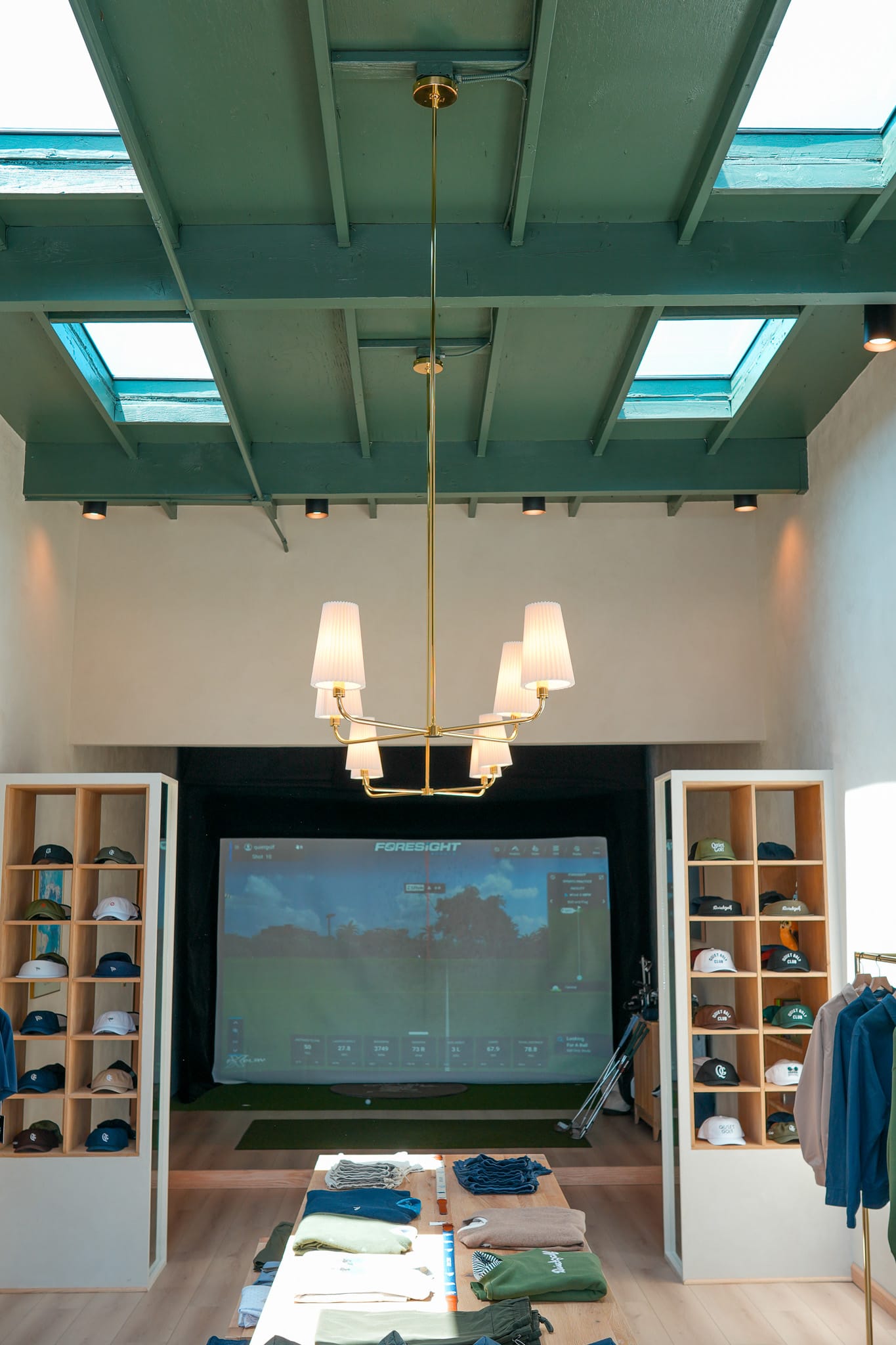
Inside, light drops through four skylights and spreads slowly across the floor.
The space is quiet. Not empty, just unhurried.
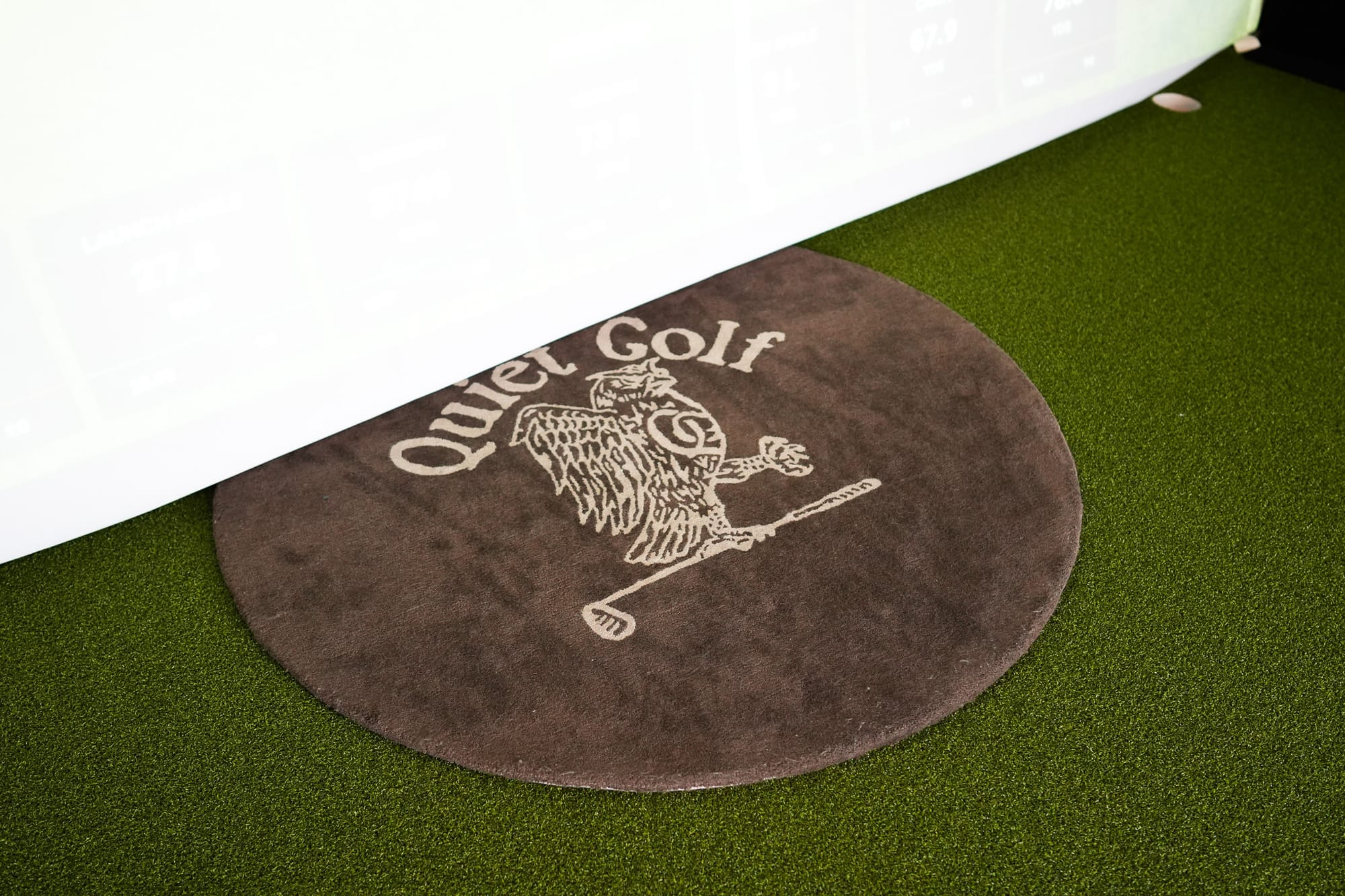
A Foresight simulator sits against the back wall. The brass chandelier overhead hangs low enough that you notice it before you notice the ceiling.
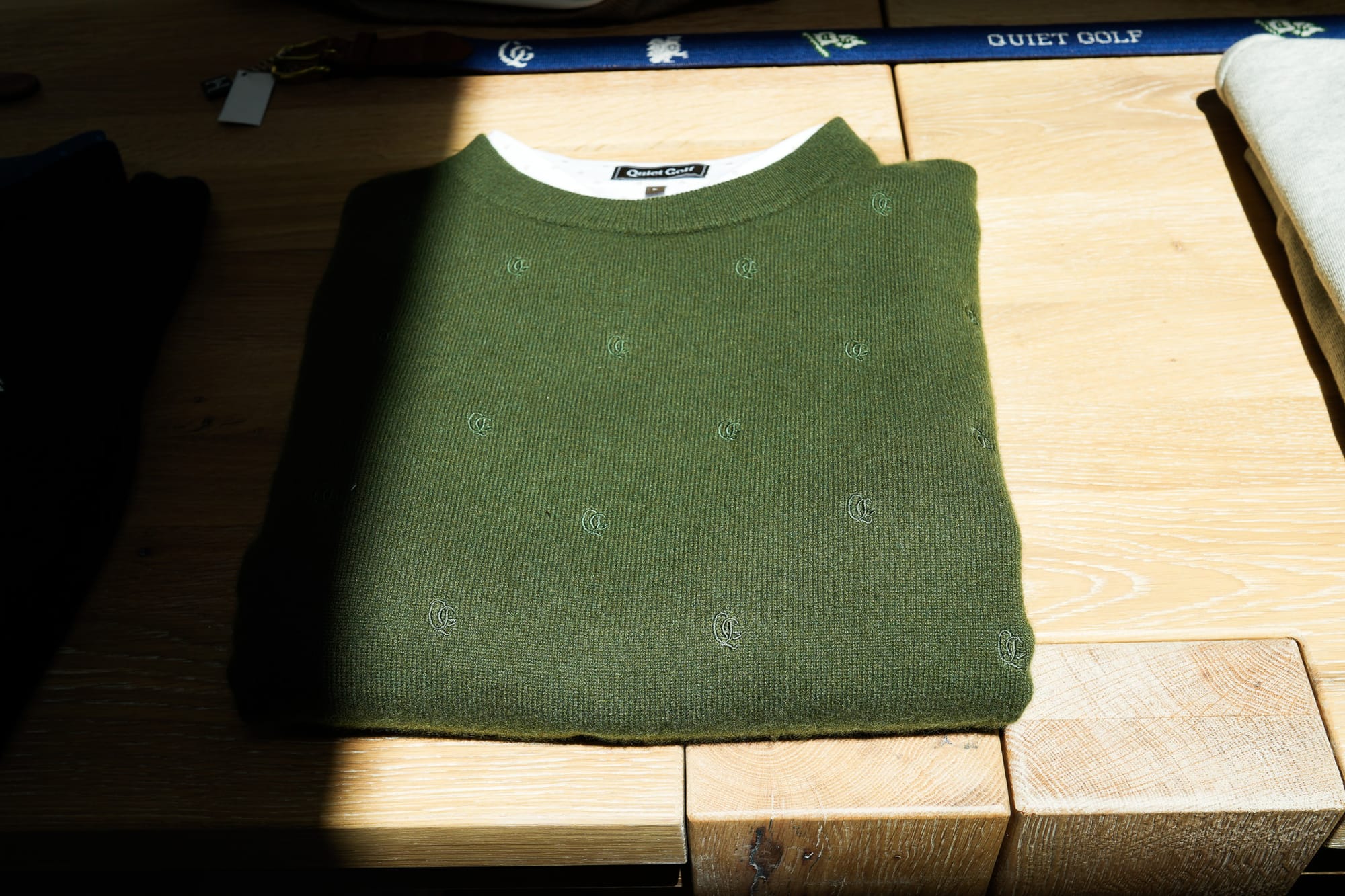
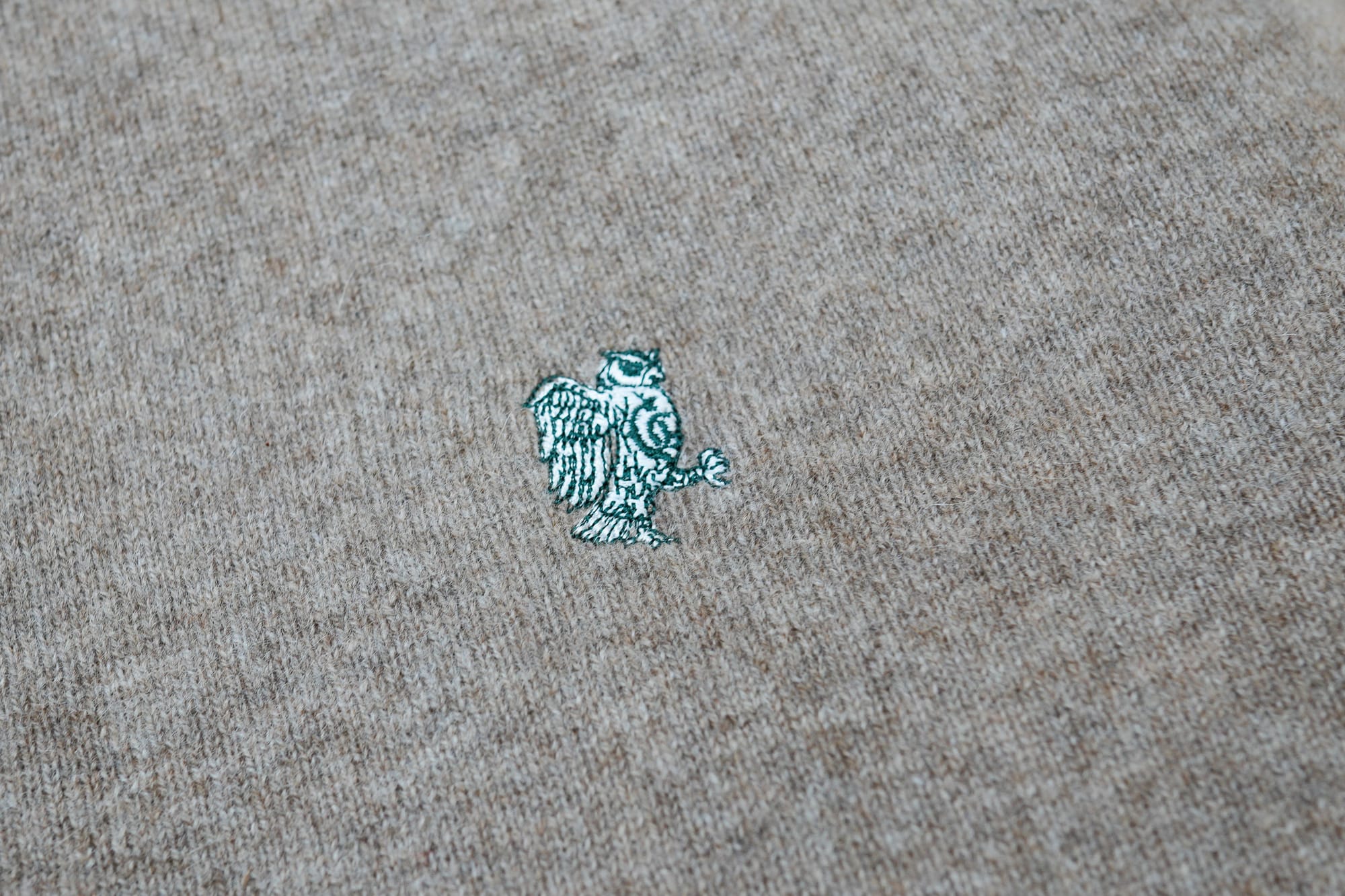
The sweaters on a center shelf are folded flat and stacked in tidy piles. You pick one up without thinking. Cashmere. Heavier than it looks. The kind of soft that takes a second to register.
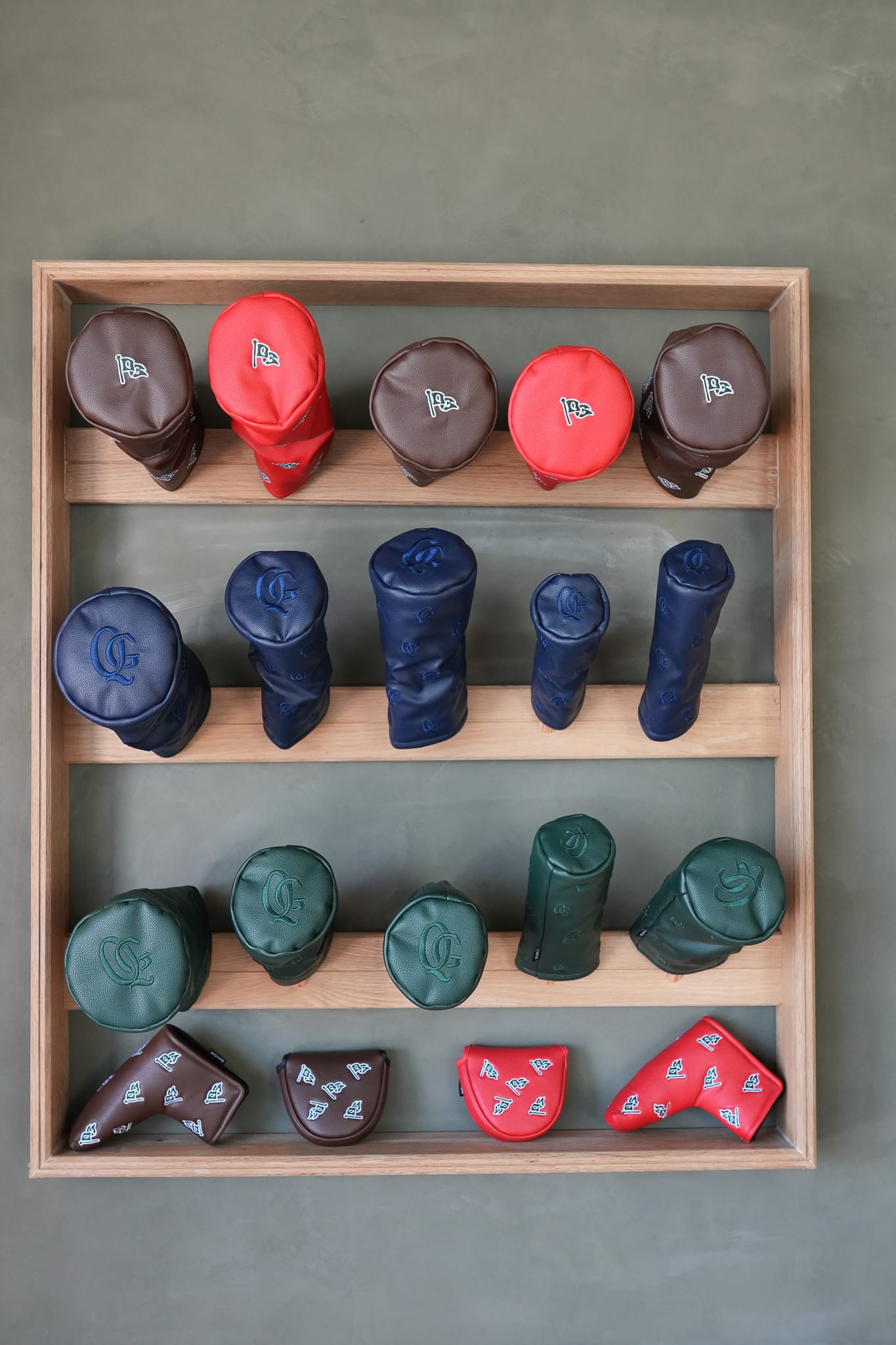
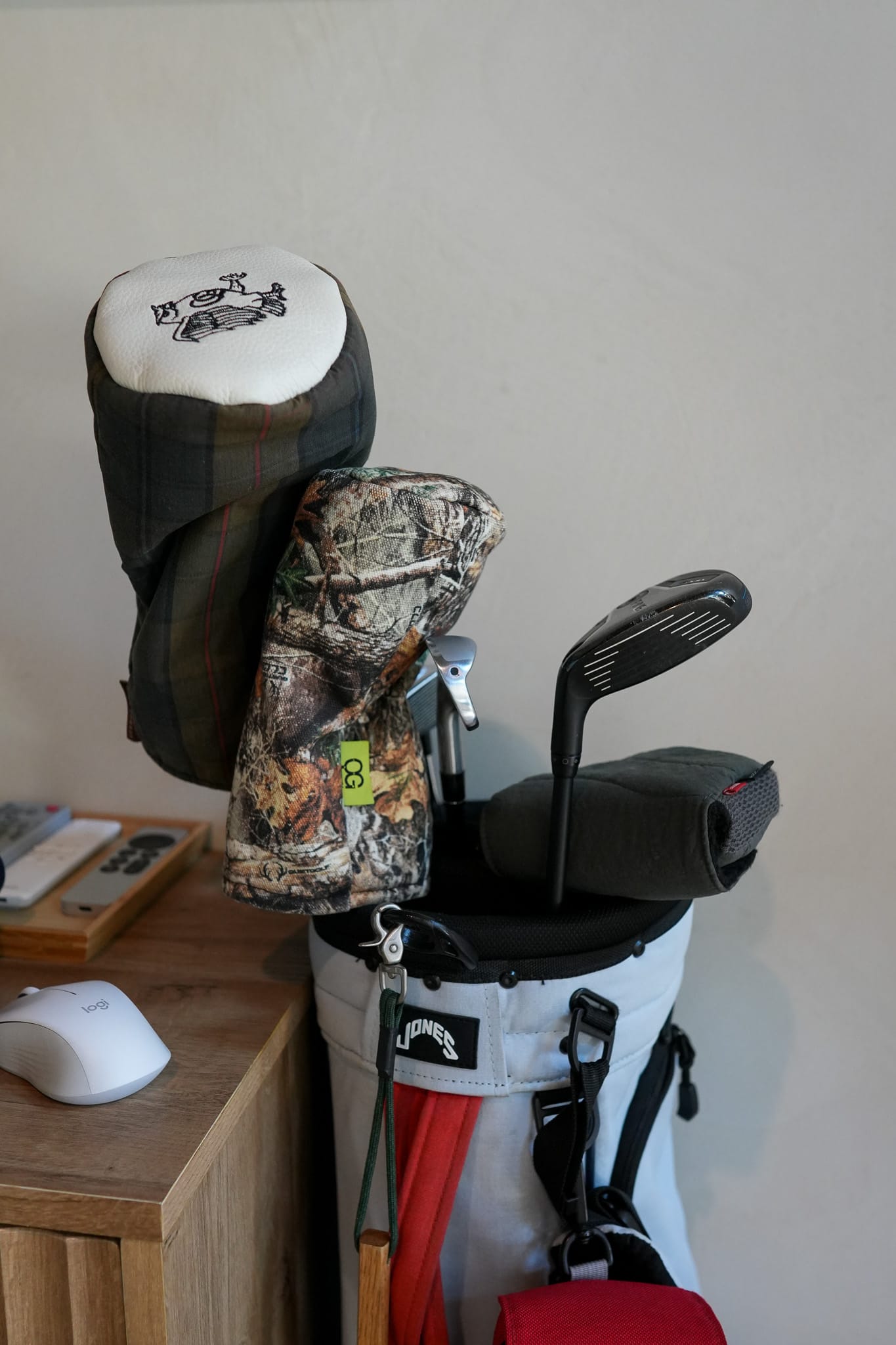
One wall holds the headcover range in a custom oak shadowbox, painted sage behind it.
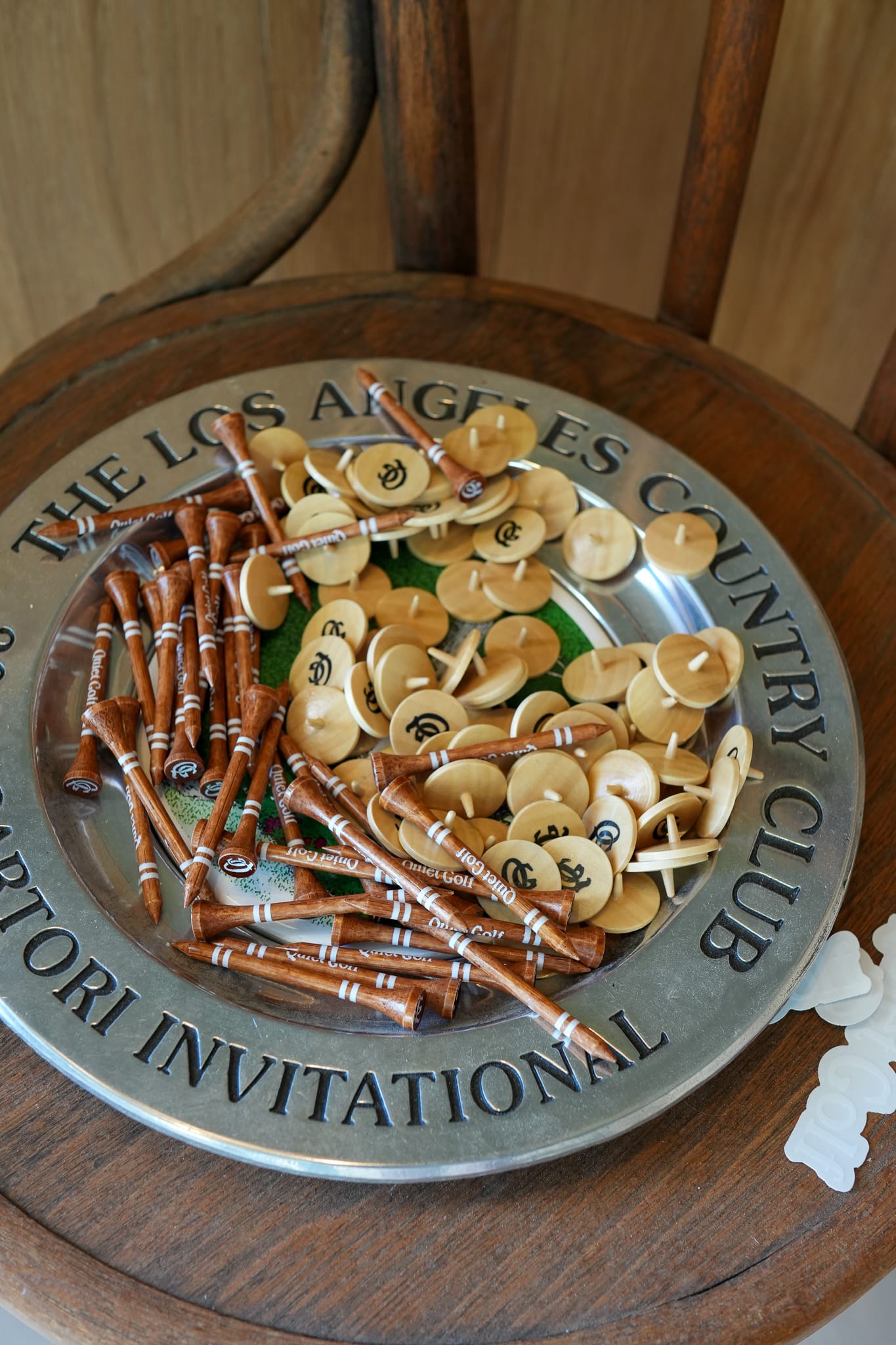
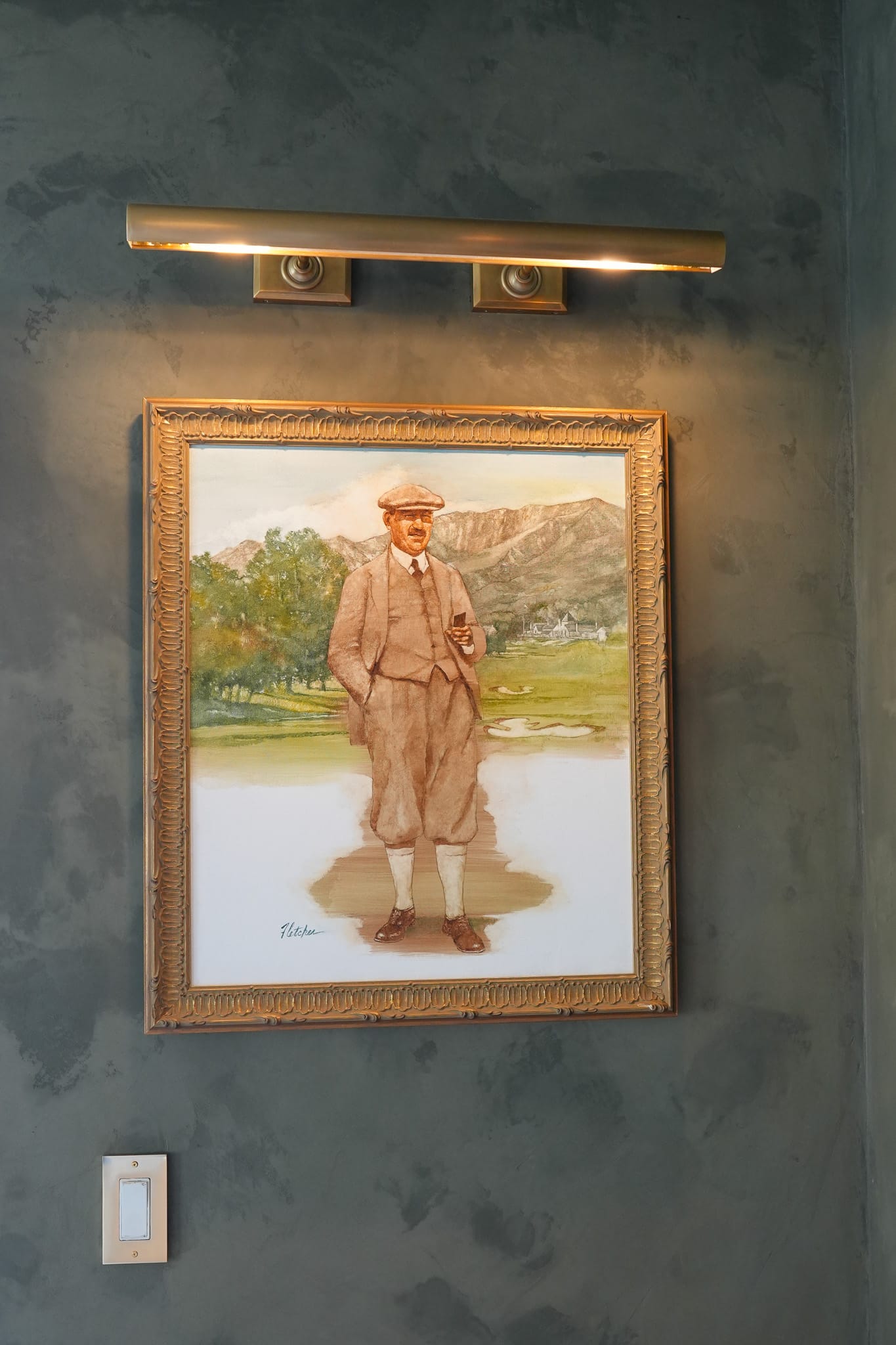
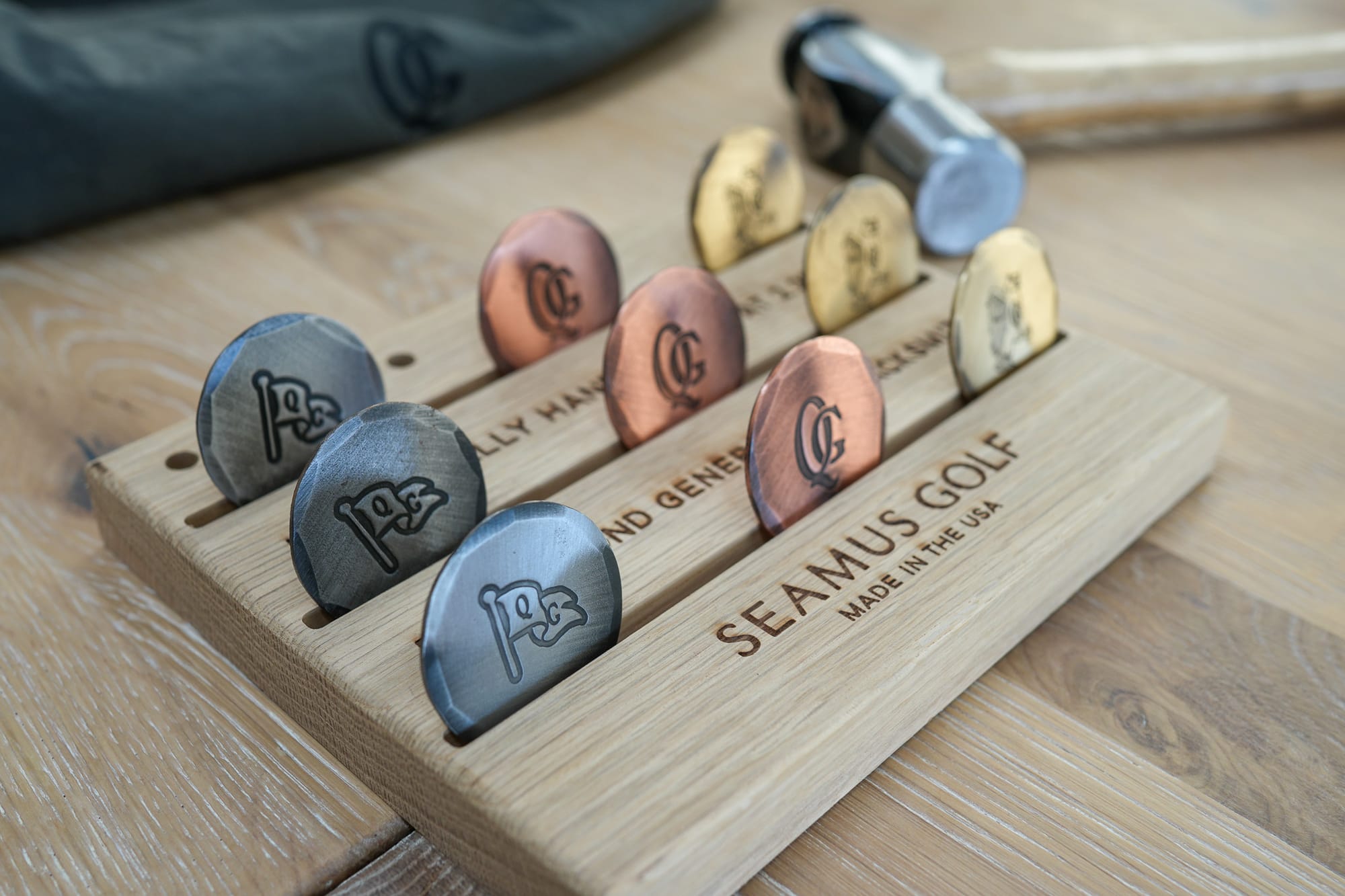
Near the entrance sits a vintage LACC tray filled with tees and ball markers. Above it hangs a watercolor under a brass picture light — a golfer in plus-fours and a flat cap, mountains behind him that could be Montecito.
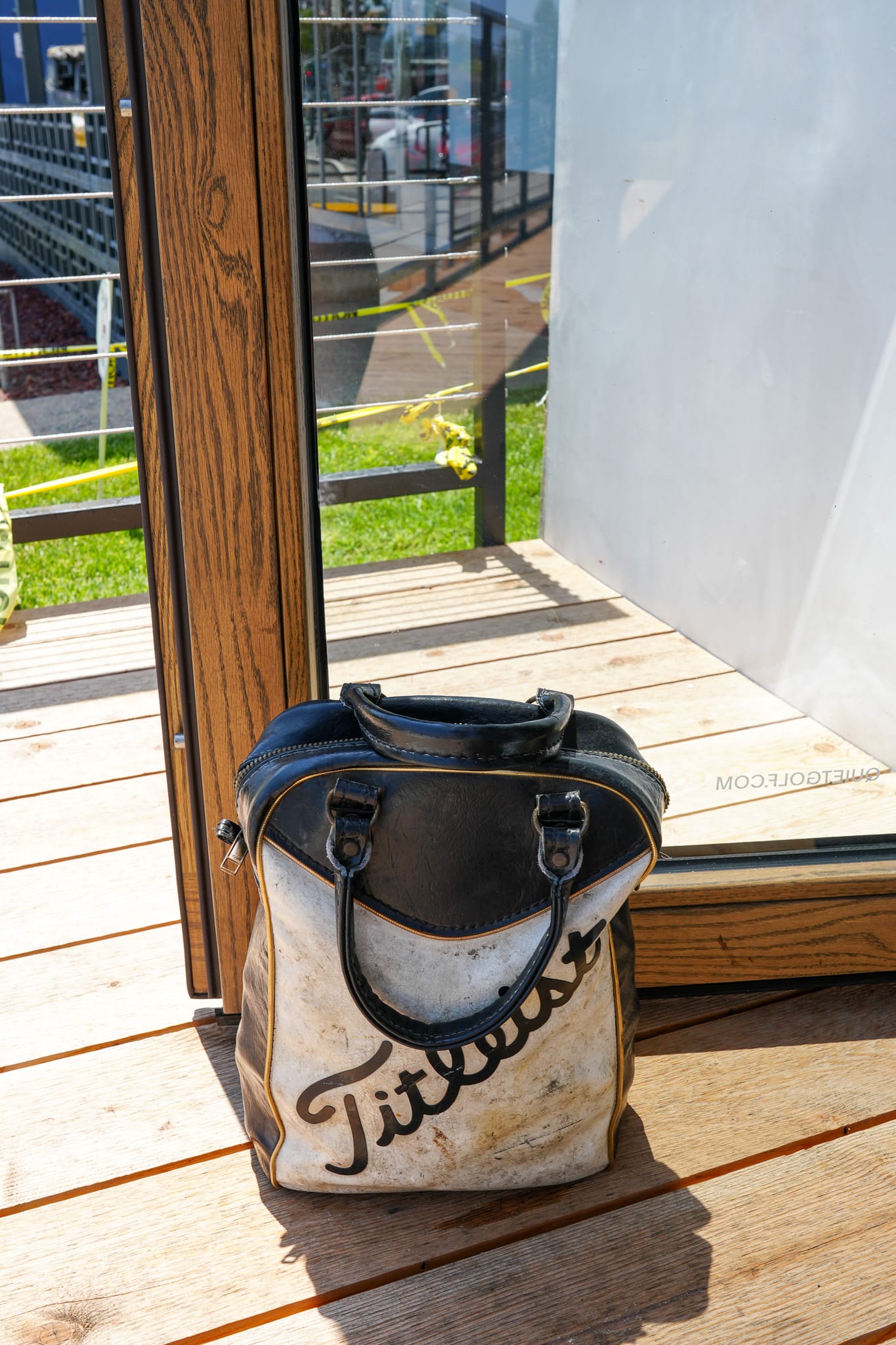
By the door rests a vintage Titleist shag bag, the leather worn white and cracked, like something someone left after a range session in 1974 and never came back for.
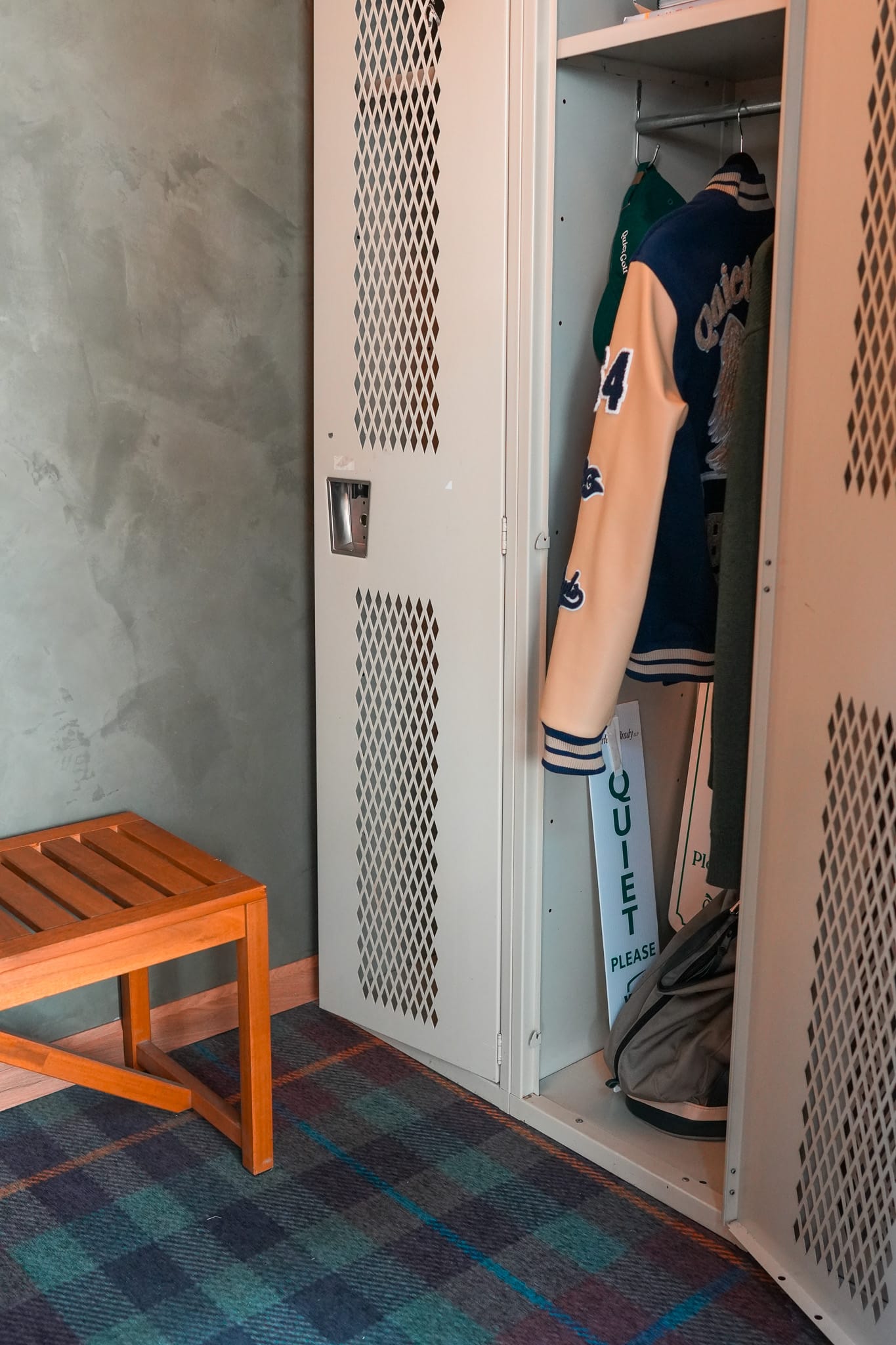
Down a short corridor is a locker room. Real vented metal lockers. Tartan carpet.
One locker stands open — How I Play Golf on the upper shelf, a tournament-style QUIET PLEASE sign at the bottom.
Asking for quiet in golf means something particular. It allows players space to concentrate. That's analogous to Quiet Golf's obsession with getting the details right. It's just like the game itself. Focus on the good, leave the bad, and most importantly, have fun doing it.
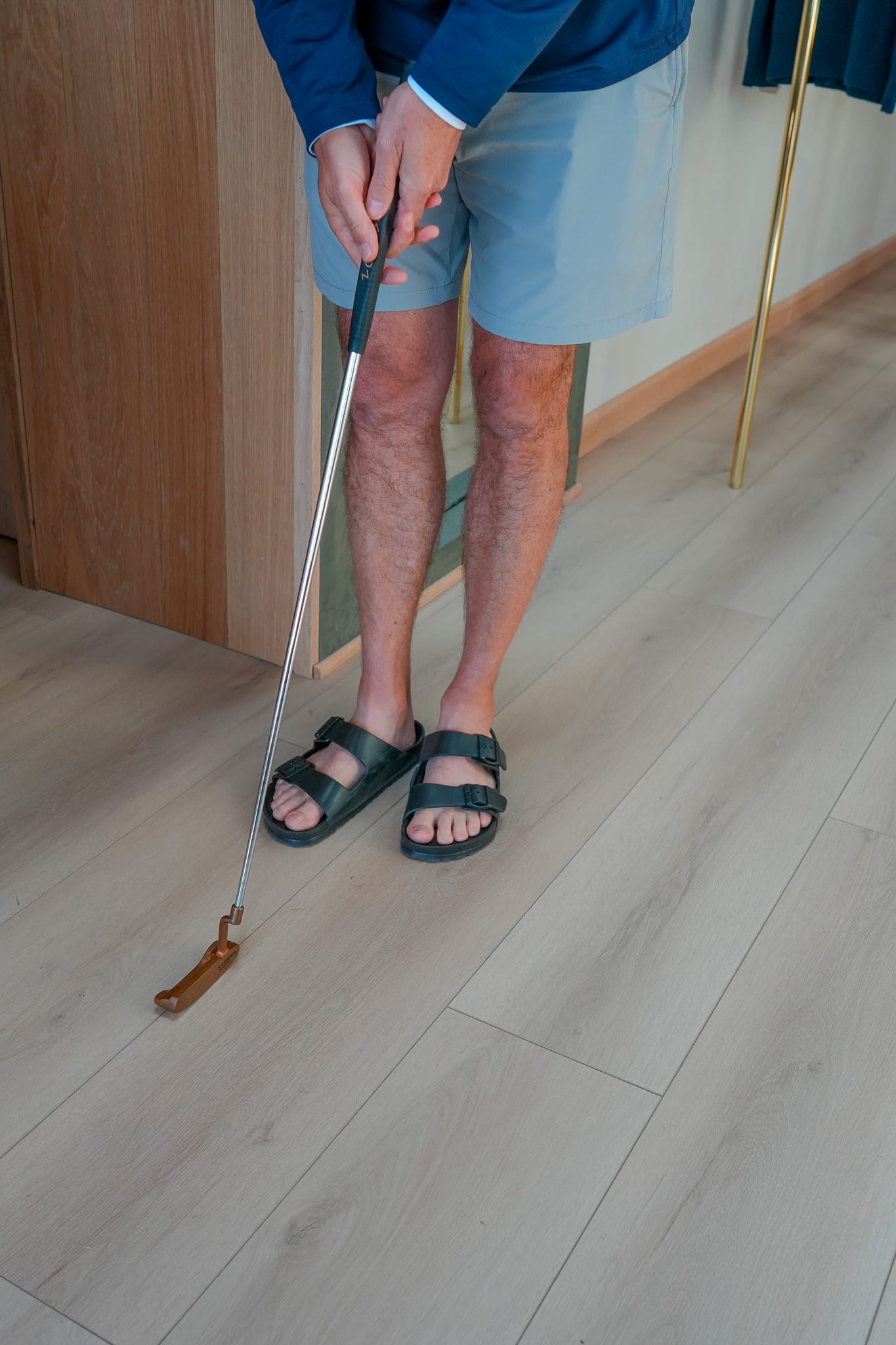
I met Lennon in the middle of all this. Blue hoodie, white chinos, a putter in his hand, a golf towel over his shoulder.
Behind him, someone was taking swings on the Foresight.
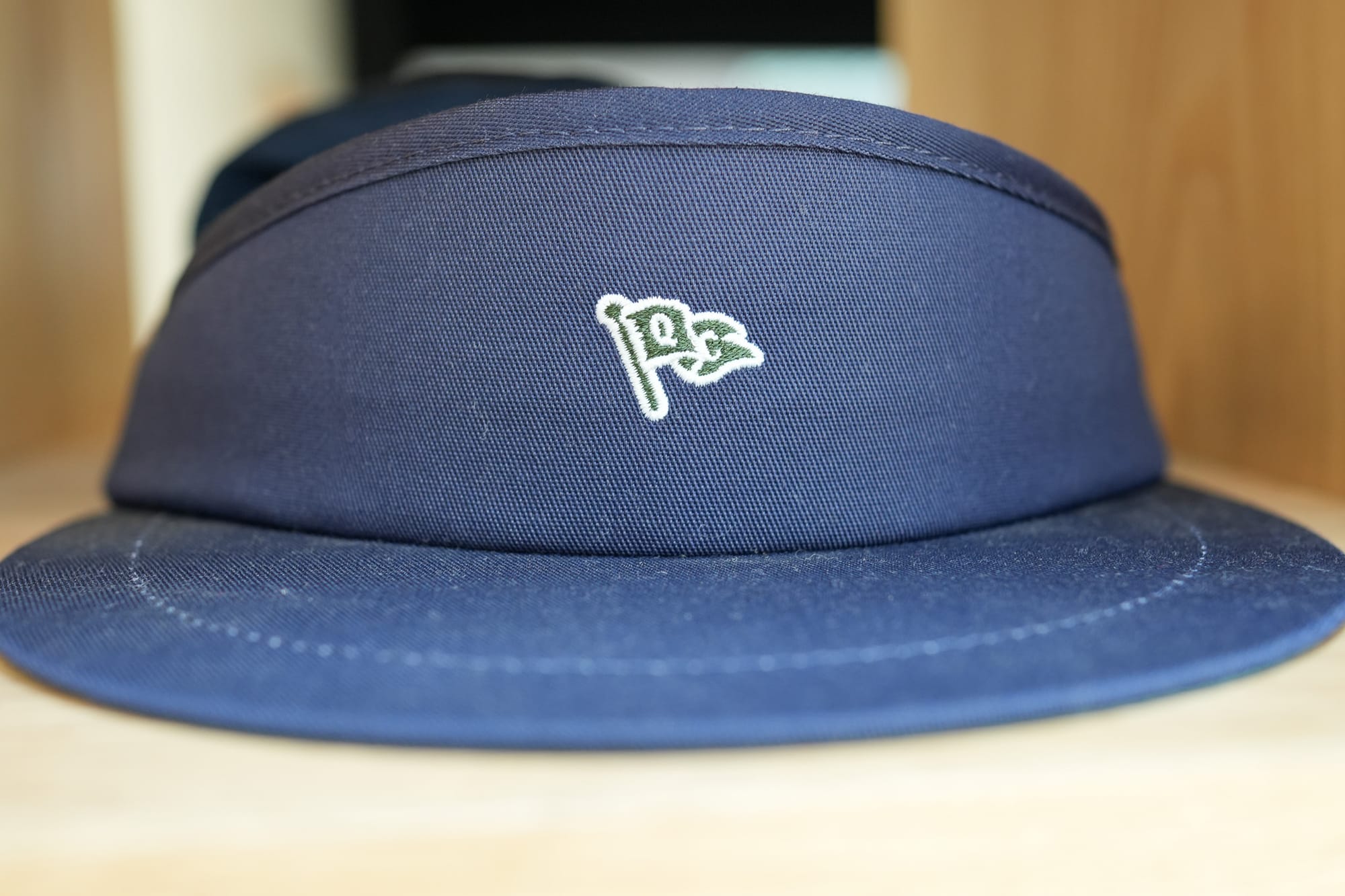
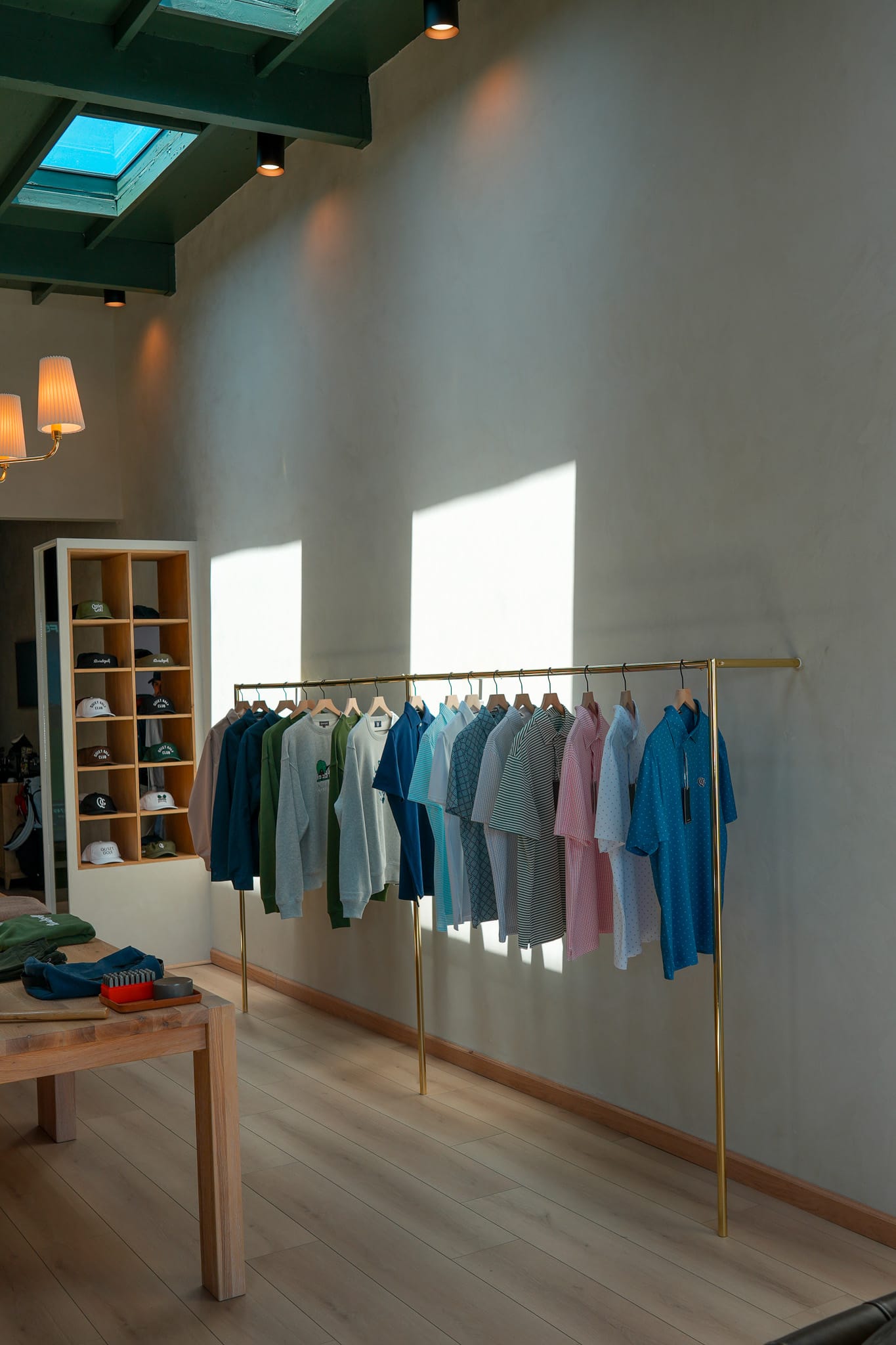
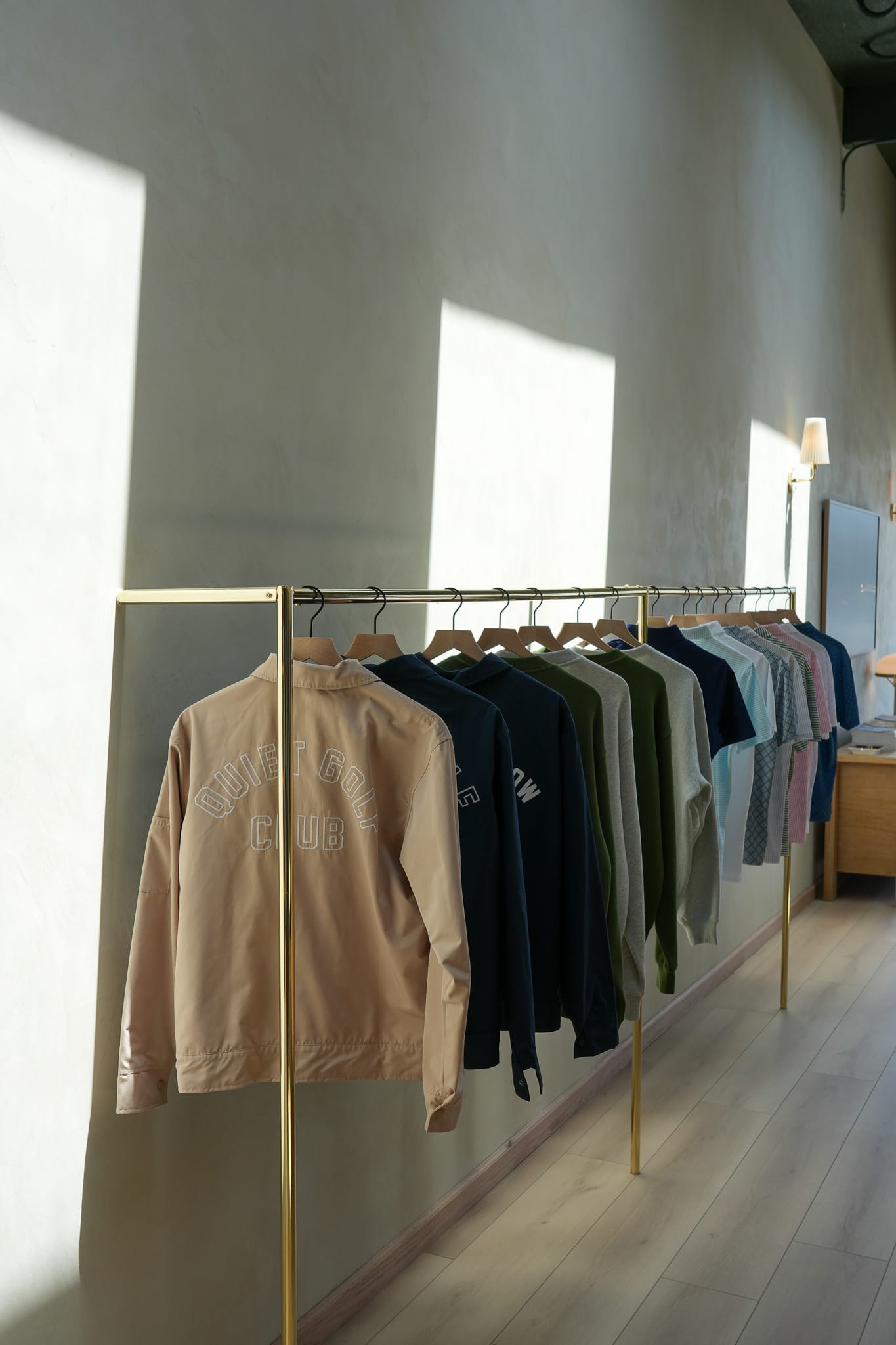
The pieces on the racks — polos in slate blue and olive, knits in forest green and navy, a coach jacket with Quiet Golf Club arced across the back — don’t shout. They sit on brass rails in the morning light and wait for you to come to them.
I asked Diaz the same question — whether the recent growth of golf had changed who the brand is for.
“More people are finding golf from outside of traditional pathways, which is a good thing. But it hasn’t really changed who Quiet Golf is for. It’s always been for people who connect with the feeling of the game, not just the activity.”
There are people who play golf and people who love golf.
The feeling he means, the reason you drive somewhere early on a Saturday and walk four quiet hours, is what the store is built around.
I asked Diaz what he’d become most protective of as the brand grows.
“The pace.”
The pace of the brand — releasing only what feels right, resisting the pressure to accelerate just because the business would let them.
“It’s easy to speed up as things grow. More product, more noise, more pressure to respond to everything.”
He thought for a minute.
“If we lose that, we lose the whole point.”
The shag bag by the door looked right at home.
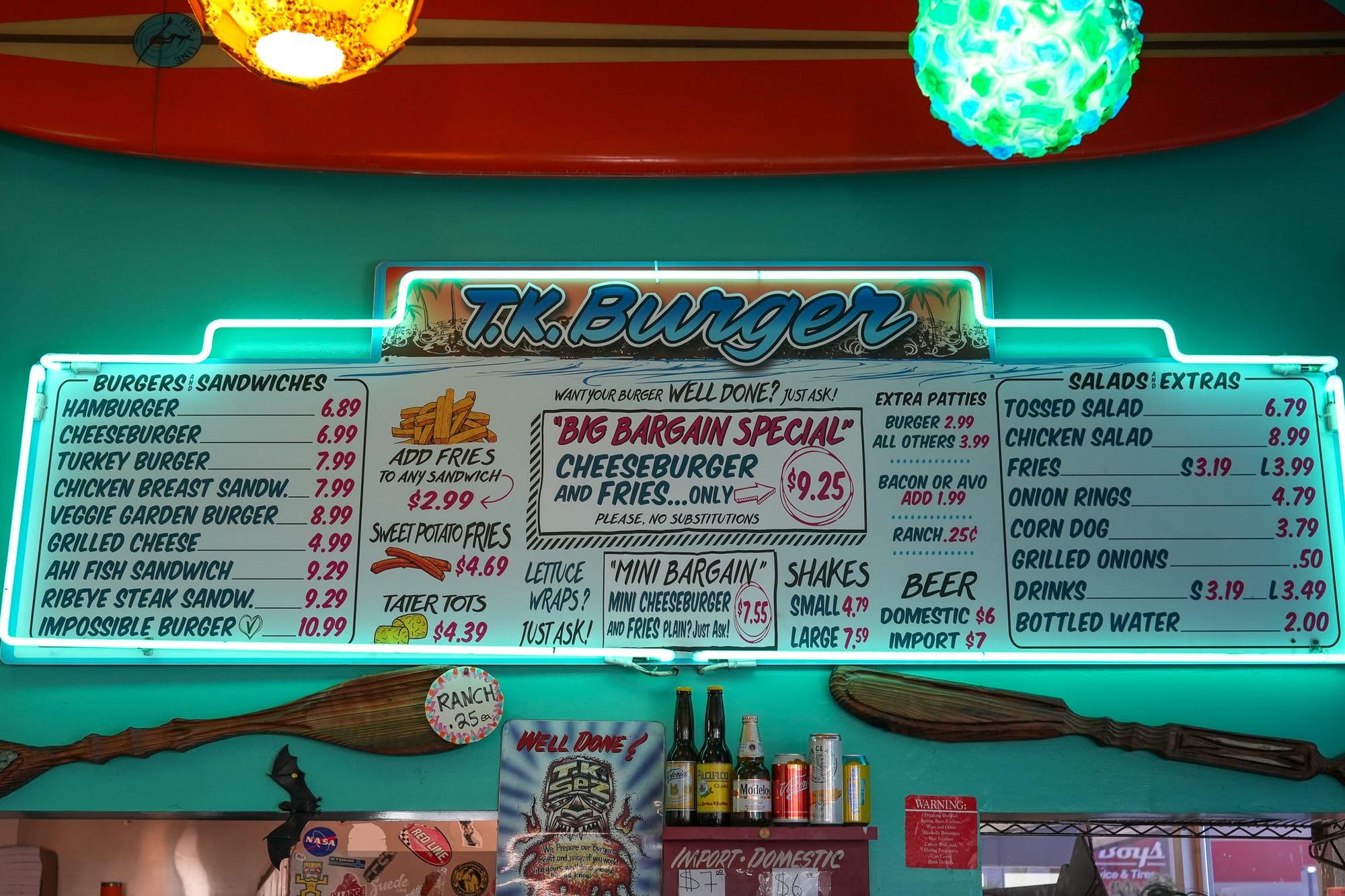
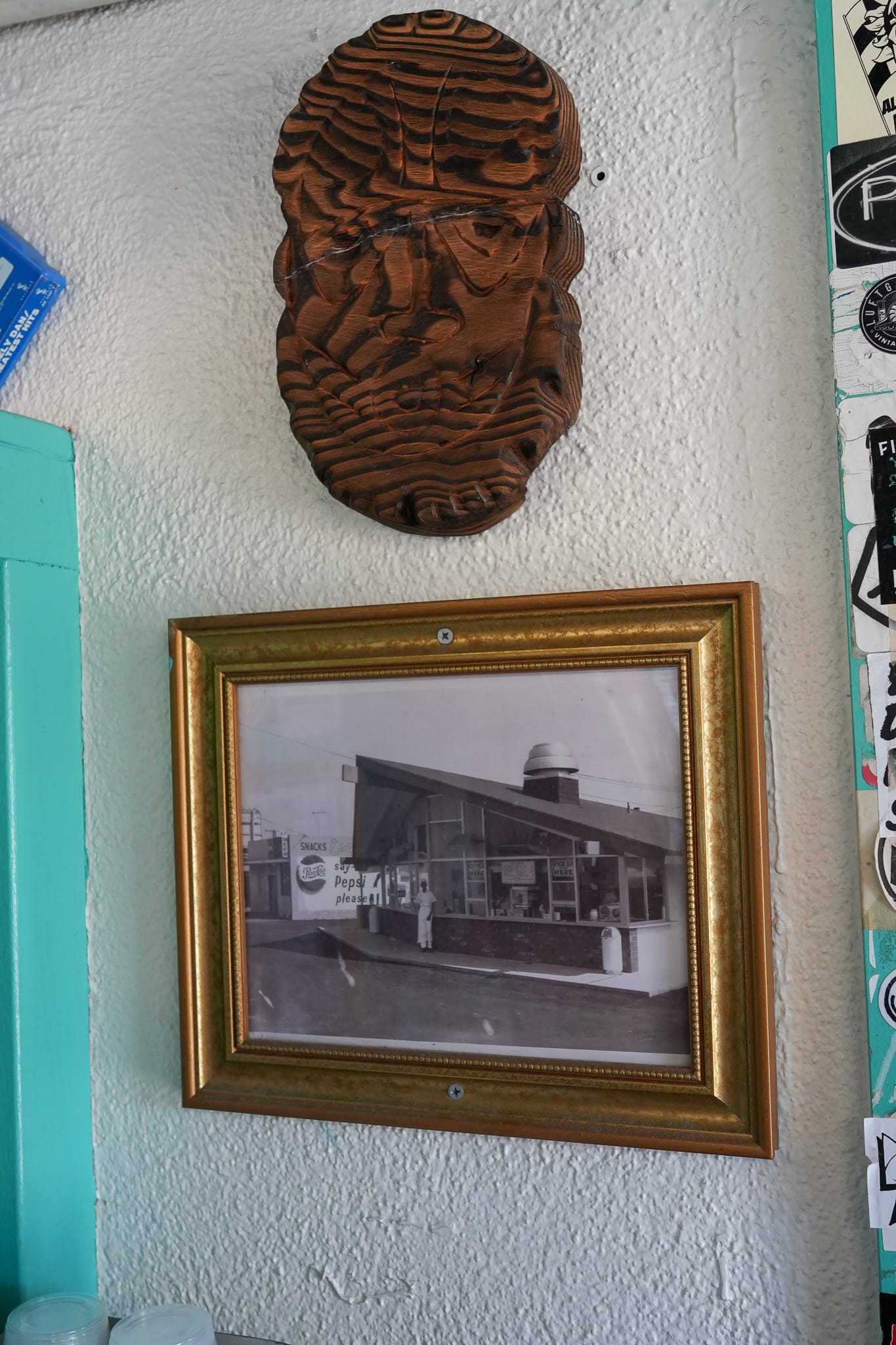
After we chatted for a bit we headed to TK Burger round the corner. The sign out front says One Love, One Burger. Inside: a milkshake mixer that looks older than anyone working there, a framed black-and-white photo of the original location on the wall, a laminated menu that hasn’t needed updating.
A place that found its thing and stopped. It's good to discover the simple things in life. The stuff that's content with quiet confidence. When you find it, you appreciate the restraint.