
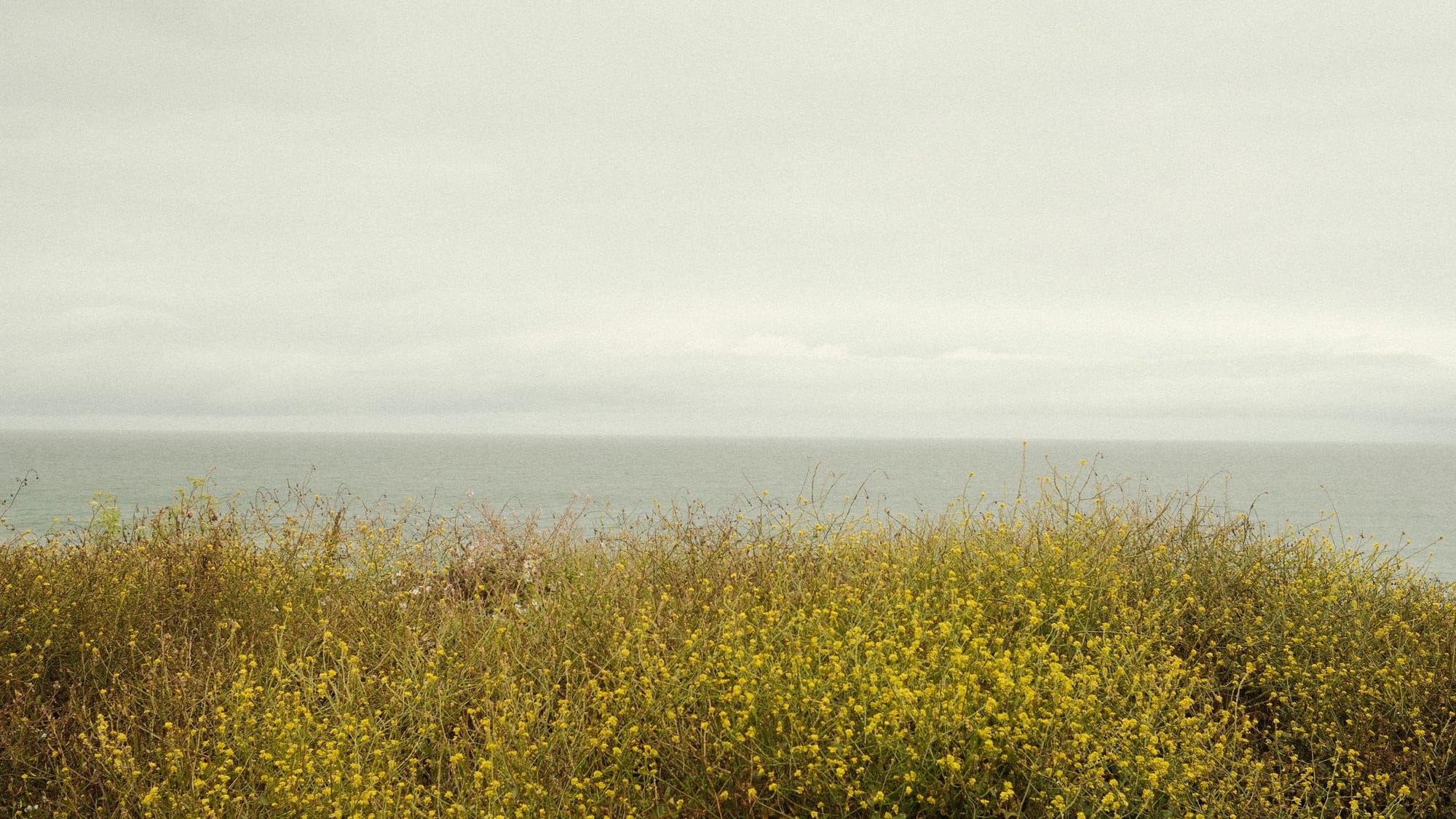
There’s a lot happening in golf right now, especially among independent brands. We covered 30 of them earlier this year, and more keep popping up. One we’ve been interested in is SLOAT, a new San Francisco label making clothes from natural fibers, with inspiration coming from traditional menswear, old golf clothes, and the weather and landscape of San Francisco’s Outer Sunset. They also have some strong opinions about what golf has become, which made for a good conversation. We talked about Fred Couples in Ashworth, clothes worth keeping, and where to eat, drink, and play in the city.

The Old Ghosts: Tell us about SLOAT and how it came together.
Teague Moriarty: SLOAT is a menswear brand rooted in golf. We make timeless, thoughtfully designed clothing using only natural fibers, with a focus on quality, craftsmanship, and making things the right way. All of our clothing is produced in Portugal, Japan, and the United States.
Dan and I met surfing about six or seven years ago and became good friends. Our wives were also friends through the same moms’ group.
At the time, I was a chef at Sons & Daughters, and sustainability was a big part of my work. We worked directly with farms and small producers, and I spent a lot of time figuring out how to improve wages, benefits, and working conditions in our restaurants while still keeping the business healthy. Easier said than done sometimes in restaurants.
I knew Dan had a background in fashion and sustainability, particularly on the labor side. So when he approached me with the idea for SLOAT, the underlying logic felt familiar and like something I could get behind.
I’ve always enjoyed starting businesses and building something new. From experience, I’ve learned that you need a strong point of view and a firm understanding of why you’re doing it, and I think we have that.
Dan Fibiger: As Teague said, we met surfing. A year or so after we became friends, I stopped seeing him in the water every day because he got bitten by the golf bug.
In 2025, he finally dragged me out to play. I’d played growing up, but literally hadn’t swung a club or set foot on a golf course since 1999, aside from one round in Vietnam in like 2005. When I came back last year, I was like a golfing Encino Man. What are these binoculars everyone looks through to get their distance? Why aren’t the sprinkler heads marked? Why does everyone ride instead of walk? And why is everyone wrapped in plastic clothing?
That last question stuck with us. We started looking around the golf apparel market and didn’t really see anyone with a hardcore focus on natural fibers and a menswear aesthetic. There are tons of brands that are cool if you’re 24, and plenty for guys in their 60s, but we didn’t see much of anything for us beyond some of the stuff ACL has done with golf or what the guys at Whim are doing. So we decided to go for it.
I think Teague’s background in fine dining and hospitality, paired with my experience seeing the good, the bad, and the ugly of the apparel business, gave us an interesting combination of expertise to build something from.
OG: The name comes from Sloat Boulevard, which runs past some of San Francisco’s best courses before reaching Ocean Beach. What does a day out there, on or off the course, demand of your clothes? And what makes natural fibers better suited to those conditions?
DF: Depends on the day, but SF demands layers so you can actually feel your body temperature. Natural fibers do that. They help you understand if you’re warm or cold, and you decide what to do in response.
I remember playing a round at Presidio last year in a polyester polo, and it was a gnarly SF day — warm, cold, windy, wet, dry, all of it in 18 holes. I vividly remember walking down the 18th having no idea if I was freezing or boiling. I felt like I had a fever because my polyester shirt did whatever polyester does and had me totally dissociated from my body.
So yeah, SF demands layers, and it demands that you know whether you’re warm or cool. Natural fibers don’t lie. They tell you the truth.
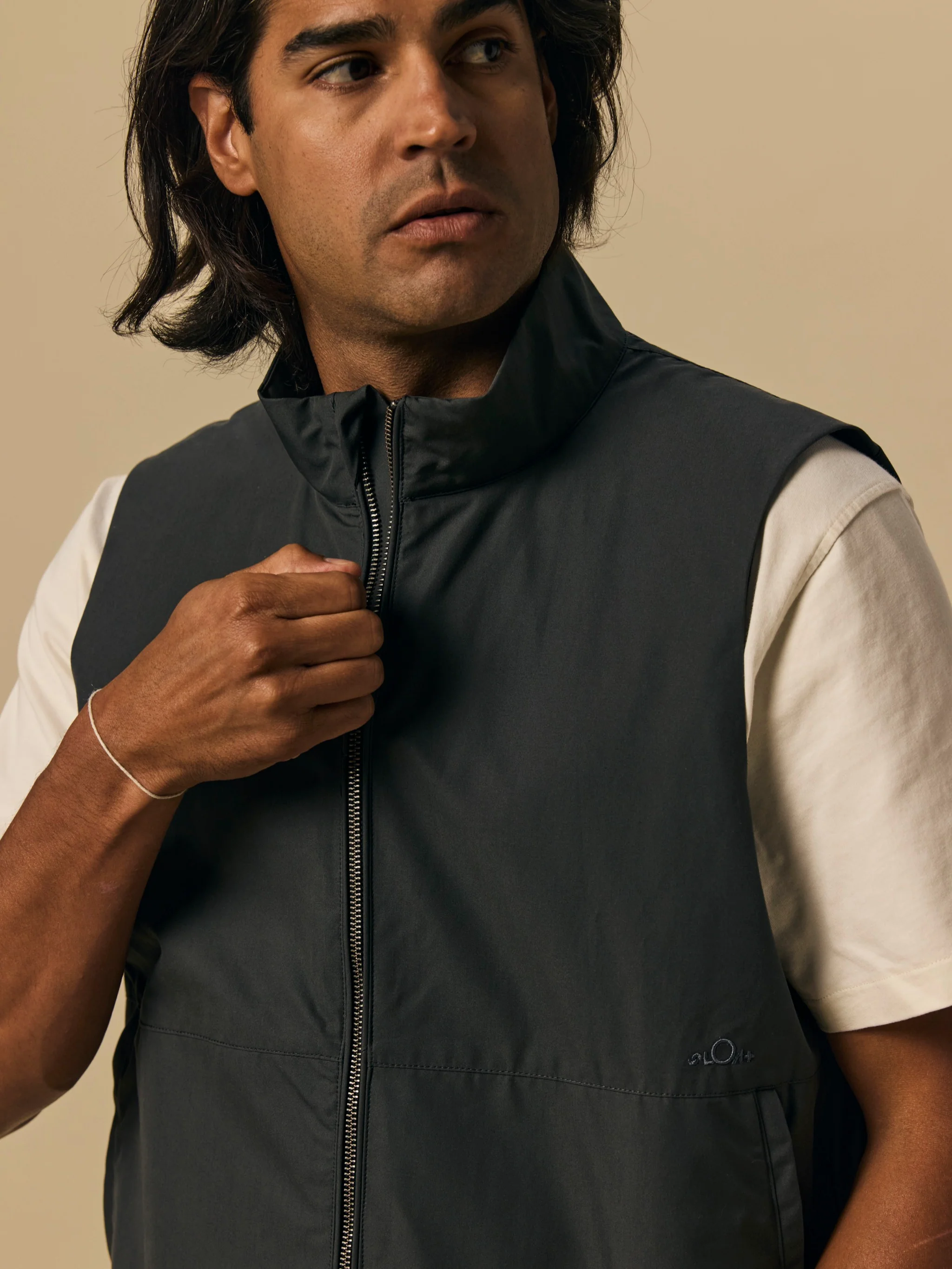
TM: A defining feature of San Francisco is its microclimates. It can be in the high 70s in the Mission, while out in the Sunset or at Ocean Beach, it’s in the high 50s or low 60s, foggy and windy. So whenever you leave the house, you pretty much always need to bring layers.
Sloat Boulevard is where we surf and where we golf, and we wanted to make clothing that works for that lifestyle. Ideally, you can put on one outfit in the morning and have it work all day, wherever you end up in the city.
The Ventile outerwear is a good example. It’s a woven cotton fabric that provides wind and moisture protection without looking like technical hiking gear. You can wear it on the course in the morning, but it also works if you’re heading downtown for work or going out afterward.
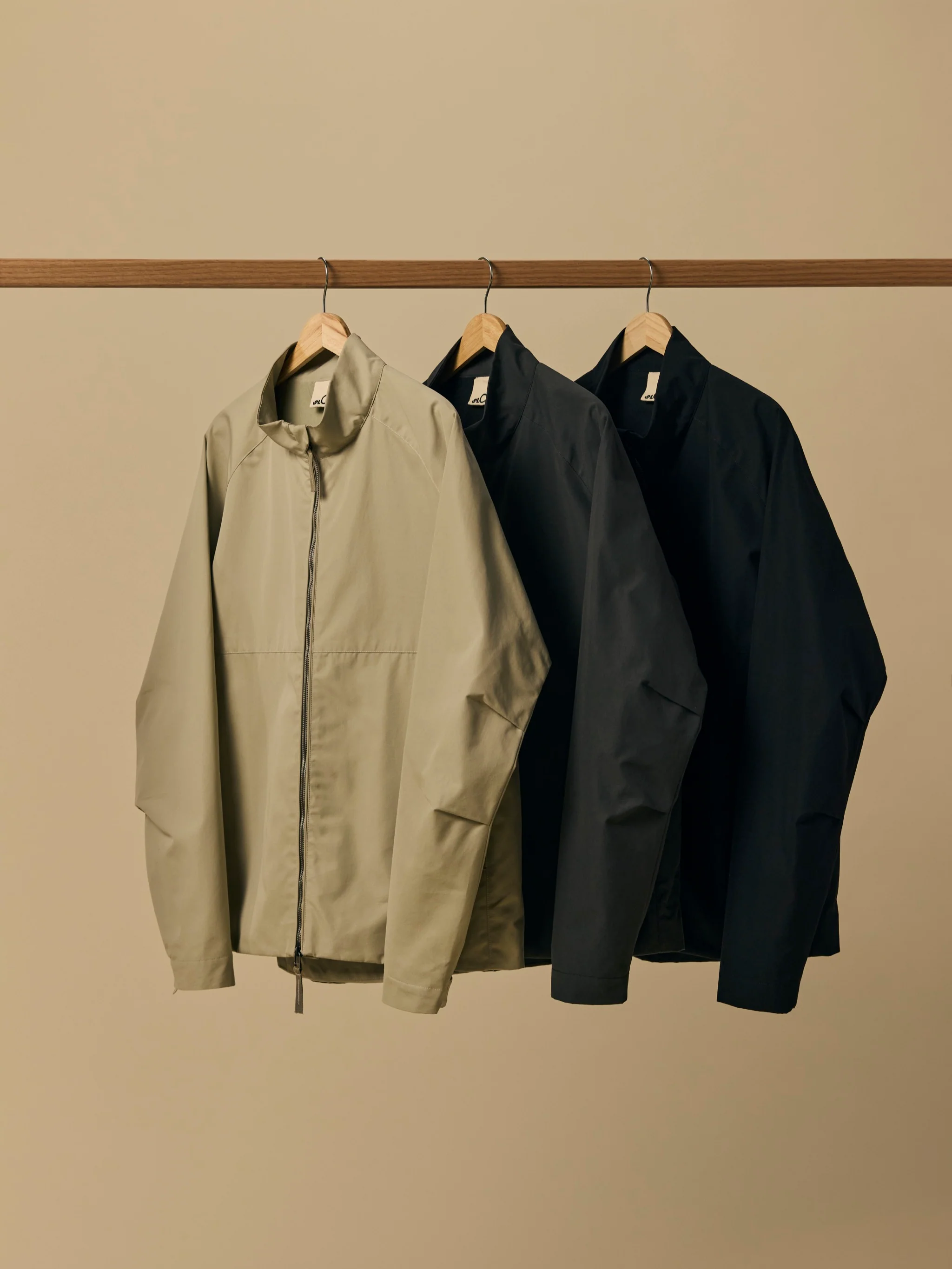
That’s really what we’re after: clothes that are practical for the conditions here but don’t look out of place anywhere else.
OG: Golf has great courses, great equipment, and a lot of history, but the clothes don’t always measure up. Why do you think golf clothing has become so disconnected from the rest of menswear?
DF: When I left the game in the late ’90s, my recollection is that most golf clothes were still made from cotton, cashmere, wool, and other natural fibers. Then, with the rise of Tiger, we saw Nike and Adidas going hard into the game, and they did what they do.
To their credit, the big sportswear brands helped grow the game in an awesome way. But they also approached golf through the same framework they applied to basketball, football, and other sports. And that just doesn’t make sense to me. Golf is not the same as other sports.
Function is necessary in golf apparel, but performance, at least as the big sportswear companies define it, really isn’t. I think certain brands have sold golfers on flawed logic, convincing them they need moisture-wicking, nine-way stretch, whatever, to be a good golfer. There are many reasons someone might not be a good golfer, but I guarantee you the moisture-wicking capabilities of their polo shirt are not one of them.
What I do know is that when I came back to golf after more than 25 years away, I expected to find brands like Ashworth and others that had built upon that great menswear aesthetic of the ’90s. I’d completely ignored the game during that time, so it was wild to see how far golf apparel had veered off course.
I mean, Fred Couples wearing Ashworth in 1996? F*cking incredible. Nothing better. And then I come back to the game, and everyone’s wearing spandex joggers. What happened?
TM: It’s interesting because golf clothing used to be much more closely connected to traditional menswear.
My grandfather was a big golfer, and when I was a teenager, I inherited a lot of his old clothes. Really nice V-neck cashmere sweaters, cardigans, and things like that. They were clothes he wore golfing, but I was wearing them as everyday clothing because they were just really nice, comfortable pieces.
Somewhere along the way, particularly over the last ten or twenty years, golf clothing moved toward tight polyester shirts, bright floral prints, and a performance-driven aesthetic. It became something you put on specifically to play golf rather than something you’d actually want to wear throughout the day.
One of our main goals with SLOAT is to make clothes you feel good wearing, without feeling like you’re putting on a costume to go golfing.
We want clothes that aren’t all that different from what you’d wear to a meeting, to work, on a date, or just going to get coffee. There’s no reason those things need to be so separate.
OG: The Ventile outerwear traces back to a golf jacket passed down from a grandfather. What else shaped the first collection?
TM: The grandfather story with the jacket is actually Dan’s, which is funny because I had a similar experience with my grandfather’s cashmere sweaters. He was a big golfer and had awesome style.
I think surf and skate culture have also been pretty big influences for us. Not necessarily the logos or visual identity of those cultures, but more the comfort and the silhouettes.
I grew up in Santa Cruz and skated a lot as a kid. Back then, you wore Dickies, Ben Davis, and workwear. Clothes were generally a little baggier, and you could move around in them. They weren’t made of stretchy technical fabrics; they were just cut in a way that let you move.
I think that’s something golf clothing has gotten away from. Everything has to have stretch now, and I don’t really think that’s necessary. If clothes are cut properly, you should be able to move comfortably without needing a bunch of elastic fibers in the fabric.
Another thing I really like about skate culture is the way people’s relationship with their clothes changes as they age.
When I was growing up, having a worn spot on your shoe from doing ollies and kickflips was almost a badge of honor. Someone could look at your shoes and immediately know you actually skated. The wear was part of the appeal.
We want our clothing, especially the outerwear, to have that same quality. We want pieces that age and wear well, where the marks that develop over time become part of the garment’s character.
Rather than something that needs to look new and shiny all the time, we’d like people to own these pieces for years and have them actually get better with age.
DF: I inherited my grandfather’s golfing jacket after he died. He must’ve bought it in like 1960, and it lasted forever. That simple thought of wanting to make stuff that you might just pass down to your kid or grandkid as an heirloom or artifact is so simple, but it’s also super powerful.
That aside, I’d say the inspiration for not just the first collection but the whole brand is the San Francisco coastline, the weather around it, and the color palette of the Outer Sunset. Those muted tones were an inspiration. The coast of SF is one of the most beautiful places in the world, and everything we make is meant to celebrate and represent that topography.
I also want to give a shout out to our friend Alex Castertano, our designer. Alex is a creative beast and knows fit, fabrics, and details as well as any designer I’ve ever met. He helped us realize our vision but also brought his own ideas to the first collection.
And the biggest inspiration for the first collection was that Teague and I just wanted to go golfing in clothes that our wives would approve of. I got tired of my wife laughing at me every time I put on my dumb little plastic golfing costume, so I started a brand.
OG: Say we’re in San Francisco for one day. Where are we eating, drinking, and shopping, and if we have time for nine holes, where are we playing? (Sons & Daughters doesn’t count.)
DF: Well, first of all, we’re doing 18, not 9. We’ll tee off early so the full day remains. I’ve gotta say Presidio. If you’re from out of town, it will give you a crash course in SF golf. If you play there during the summer months, you will be warm, cold, wet, dry, all of it within a single round. You won’t shoot a PR, and you will get some awesome vistas of the city. Also, the chicken tenders there are really good.
For shopping, I’d check out Presidio Post or Studio Ferris. And of course Evan Kinori. His store is literally right next door to my kids’ school. I park outside Evan Kinori every day when I pick up my kids, and his store looks like what a store should look like — a gallery of made and discovered objects. He should make golf stuff.
For lunch, I’d grab pho at Yummy Yummy in the Richmond or a fish burrito at Hook Fish Co. in the Sunset. For dinner, Mama Ji’s in the Castro. Unfortunately, that recommendation won’t be much help to anyone reading this after October 31st because she’s closing. But Mama Ji’s has been serving some of the best Sichuan food in San Francisco for the past 20 years, and we’re going to miss her so much.
Favorite bars in SF are the Royal Cuckoo and the Station in Glen Park.
TM: If we only have time for nine holes, I’d definitely say Gleneagles. It’s a municipal course in McLaren Park on the city’s south side. It’s not particularly well-known or heavily played, but it’s a really challenging little course, and I have a soft spot for it.
It also has one of the coolest and most unique clubhouses in San Francisco. There’s a little bar in there that probably hasn’t changed in sixty or seventy years. It’s a pretty special place.
For food, I’d head to Sandy’s in the Upper Haight. My friend Peterson started it during the pandemic. He’s from New Orleans, and it’s a muffuletta sandwich shop. They make one of my favorite sandwiches in San Francisco. Peterson is also just a really cool guy, and he’s almost always there.
For shopping, I’d go to Tailors’ Keep, right around where the Financial District, Chinatown, and North Beach meet.
It’s not really a place you go for casual shopping, since almost everything is made to measure, but it’s one of my favorite clothing stores in San Francisco.
You can go in and have a jacket or shirt made for you, and they have an incredible selection of European fabrics. But beyond that, it’s one of the best customer experiences I’ve had in the city. The guys who run it are incredibly nice and knowledgeable, and they have great style. It’s just a really cool shop to visit.
And for coffee, Coffee Movement in Chinatown is one of my favorite spots. I think they have the best espresso in San Francisco, hands down.
OG: What is golf missing right now when it comes to apparel? How did that influence the brand and collection?
TM: I think this is really our reason for being.
Golf is missing natural fabrics and clothing with more of a menswear slant than a performance slant.
Golf as a whole has become so focused on performance and constantly selling you the next new thing. You see it with equipment companies releasing a new driver every year that promises better performance, AI technology, higher MOI, and all these other incremental improvements.
I’m sure Rory and the top players in the world can feel those differences, but for the majority of us who aren’t scratch golfers, I don’t think it makes much of a difference.
A lot of it feels like marketing designed to get people to keep buying more and more stuff. We want to do pretty much the opposite. We want to make really nice clothing that lasts a long time, with the whole point being that you don’t need to keep buying it.
You should be able to buy one or two really good polos and have them in your closet for the next decade. Same with a jacket. Buy something well-made, take care of it, and keep wearing it for years.
That’s a big part of what we’re trying to do with SLOAT. Rather than constantly chasing the next new thing, we want to make fewer, better pieces that people genuinely want to hold on to.
DF: I love golf but coming back to it after all these years I think it’s missing a lot right now, both on the apparel side and beyond it. I don’t want to sound like a traditionalist, but as Teague said, the game has gone too far into planned obsolescence and convenience culture — the clothes are disposable, apparently you need a new driver every year, and you need a $900 rangefinder that you know you’ll lose within six months. I think we want to be part of a broader movement toward bringing golf back to some of its roots.
Buy fewer, nicer clothes, keep them for a long time. Buy good clubs, pulverize them until they break. Finish your putts, there is no such thing as a three-foot gimme. Walk, don’t ride. The traditions of this game are what make it so special, and we want to make clothes that celebrate that tradition, help take us back into a slightly more analog era, and make you look good.
Sorry for the speech. To be more specific about apparel, we obviously feel that natural fibers are missing from golf. And it’s been cool to see a resurgence of interest in cotton, wool, cashmere, et cetera, and more conversation about their place in the game.
What’s interesting, though, is that many brands that have been at this far longer than we have, and, to their credit, have built some great businesses, have sold assortments completely dominated by petroleum-based fabrics. Now they’re introducing merino, cashmere, cotton, and other natural materials. And that’s cool. I genuinely hope they stick with it. But I also think the sudden shift toward natural fibers speaks to a broader lack of point of view in the market. It’s almost like, “Oh, this is what people are into now, so I guess we’ll do that too.”
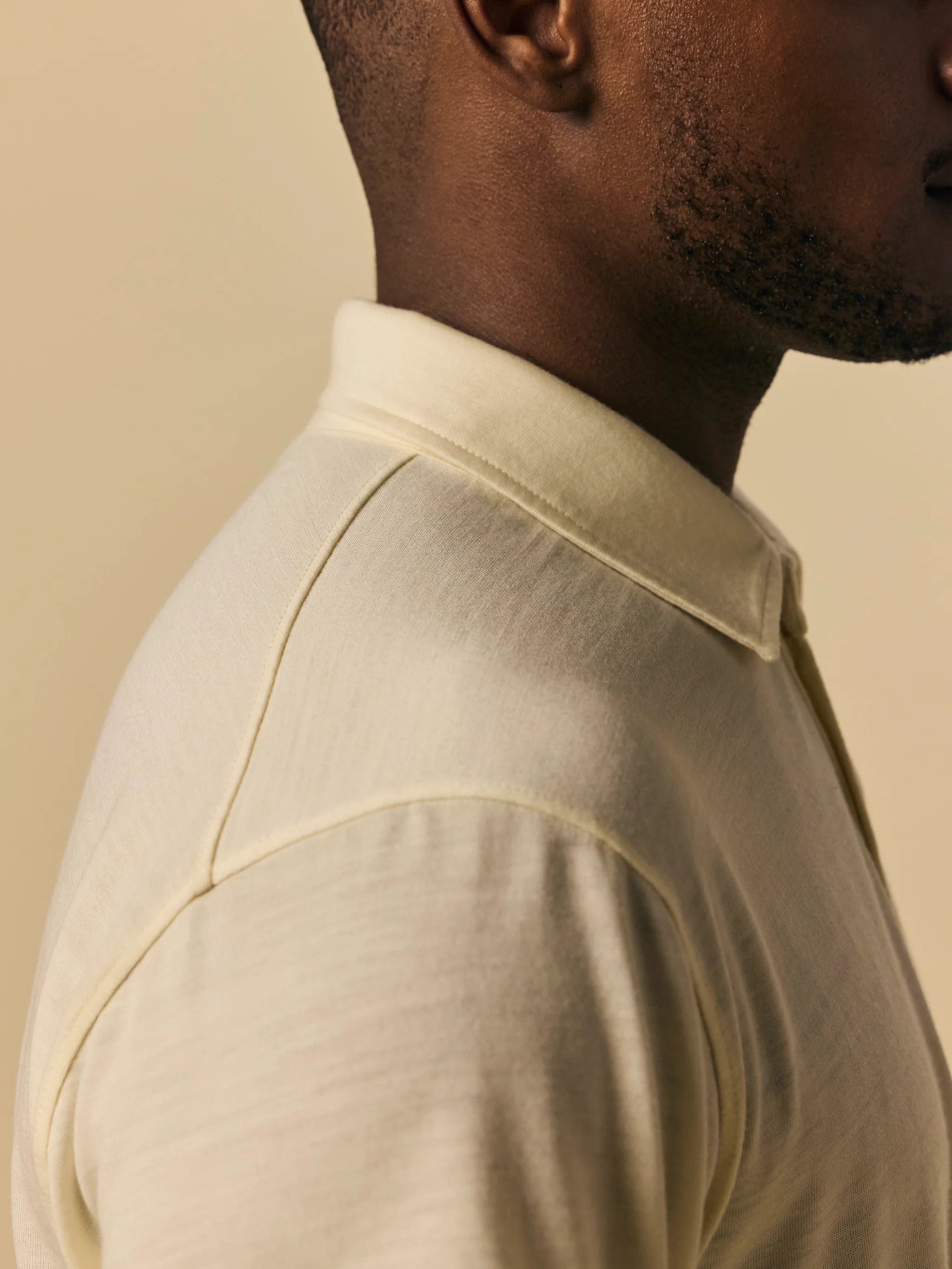
I also think golf is missing a genuine premium apparel category. There are a handful of brands trying to do it properly, but I’d argue that 90% of the brands calling themselves premium are just making sh*t up. Charging $150 or $200 for a polyester polo doesn’t make it premium – you are making your shirts in Vietnam and Bangladesh alongside mall brands that sell the same shirt with a different logo for $40. In my view, there’s no such thing as a premium polyester polo, it’s an oxymoron. You can have an expensive polyester polo, but that’s not the same as premium.
I don’t make the comment about Vietnam or Bangladesh derisively – there are some great factories in those places and that’s the world of apparel manufacturing I came from, but these “luxury” golf brands that are making polyester polos there are straight up misrepresenting stuff in my opinion.
And I don’t say that because I think everything needs to be made from cashmere or some ridiculously expensive fabric. Premium, to me, means quality materials, thoughtful design, great construction, and something that gets better rather than worse with age. That’s what I think golf has been missing, aside from a select few small brands that are doing it right.
This sounds super corny, but for us it was never about following a trend. From day one, Teague and I decided that SLOAT would use only natural fibers and would use only fabrics that hold a credible sustainability certification, made in factories we have visited and that treat their employees well. Period. It’s a hard-and-fast rule that informs every product we develop.
The other thing golf is missing is a better aesthetic. I don’t think you should be able to identify someone in a grocery store or bar who has just been golfing. And yet right now you can almost certainly spot them. We want to help golfers camouflage themselves when they leave the course and re-enter the real world.
