
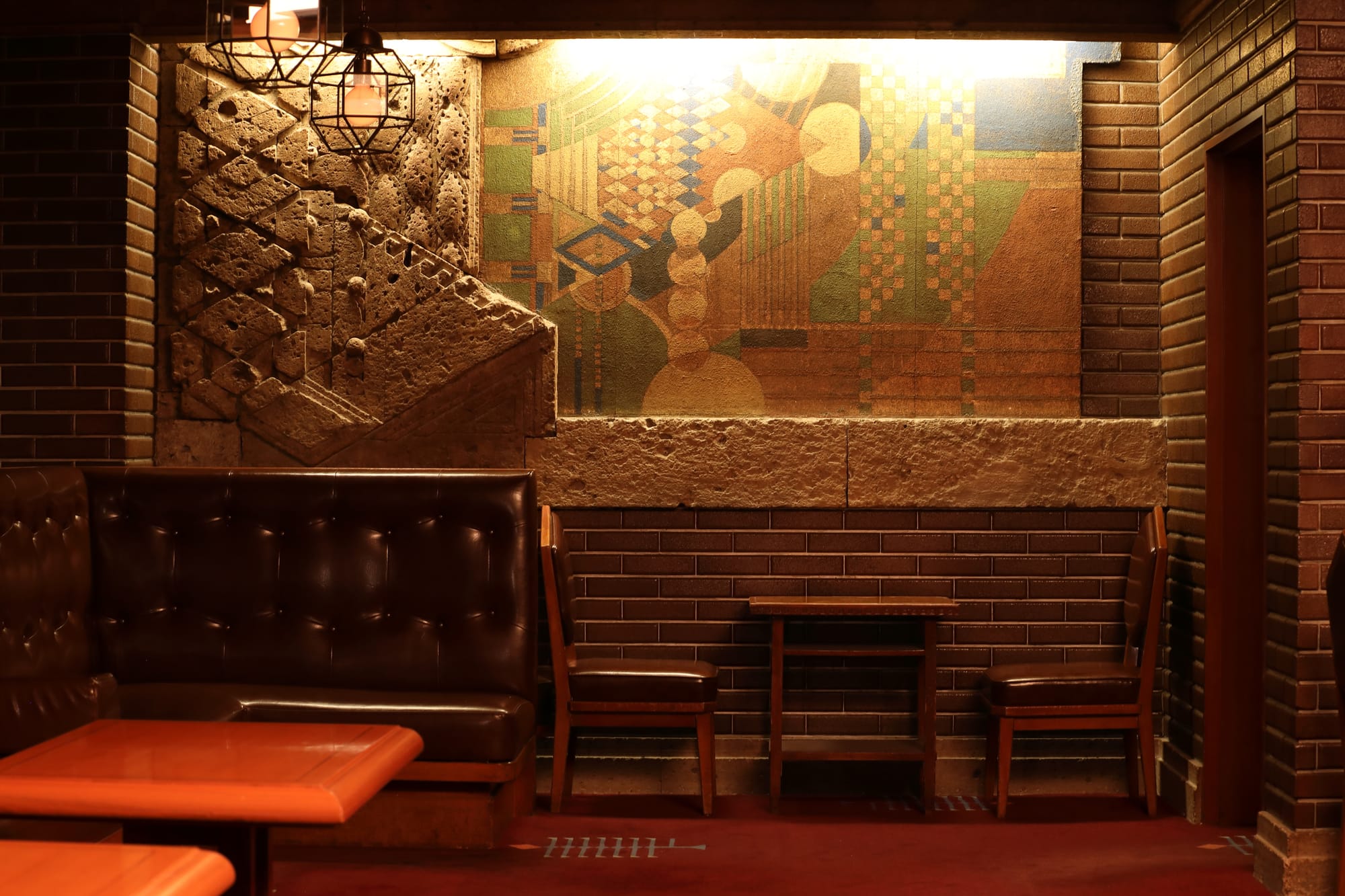
As you settle into the Old Imperial Bar in Tokyo, your eyes adjust to the dim light and begin to pick out fragments of a different age: carved Oya stone and colorful geometric designs, the last reminders of Frank Lloyd Wright’s bold vision. His version of Imperial Hotel has been gone for decades, yet here, over an expertly-made cocktail and a perfect example of Japanese omotenashi, you are immediately transported back to old Tokyo. This small corner of one of the city's great hotels serves as the gateway to a fascinating history; one where architectural design and golf come together in an unlikely intersection.
Frank Lloyd Wright was uncharacteristically candid about one of the few inspirations that shaped him: the Japanese woodblock print. “If Japanese prints were to be deducted from my education I don’t know what direction the whole might have taken,” he wrote in his 1912 book The Japanese Print. He went on: “The most important fact to realize in this study is that, with all its informal grace, Japanese art is a thoroughly structural art… It is always, whatever else it is or is not, structural.” In those lines, Wright reveals the depth of his affinity for the visual beauty of Japanese art, but even more so for its underlying belief that structure and art are inseparable.
A quick look at photographs of Wright’s Chicago home from the late 1800s reveals an almost singular preoccupation with Japanese art and, by the time of his death, he owned more than 6,000 pieces. He described Japan as “the most romantic, artistic, nature-inspired country on earth,” a sentiment that took hold long before he ever saw it in person. As anyone who has immersed themselves in Japanese culture from afar can attest, you can imagine the anticipation he felt as he prepared for his first trip there in 1905.
Visiting Japan only strengthened Wright’s conviction that the ideas he admired from afar could be translated into built form. By 1911, Wright was angling for the Imperial Hotel commission. He had a burgeoning reputation, but had yet to receive a major commission. Still, he was an attractive candidate from the beginning, as the Imperial was always envisioned as a place where Western design sensibilities met Japanese hospitality — a place where visitors felt comfortable and welcomed. In 1916, he was awarded the contract for the hotel's design by general manager Aisaku Hayashi. Wright signed it, then traveled back to Tokyo.
Wright threw himself into the work in Japan, where his artistic design visions met the practical building conditions on the ground. Two of the biggest needs for the building were a direct result of the environment. Japan was prone to massive earthquakes, often followed by widespread fires that burned down the buildings that survived the initial quake. The Imperial needed to withstand these threats.
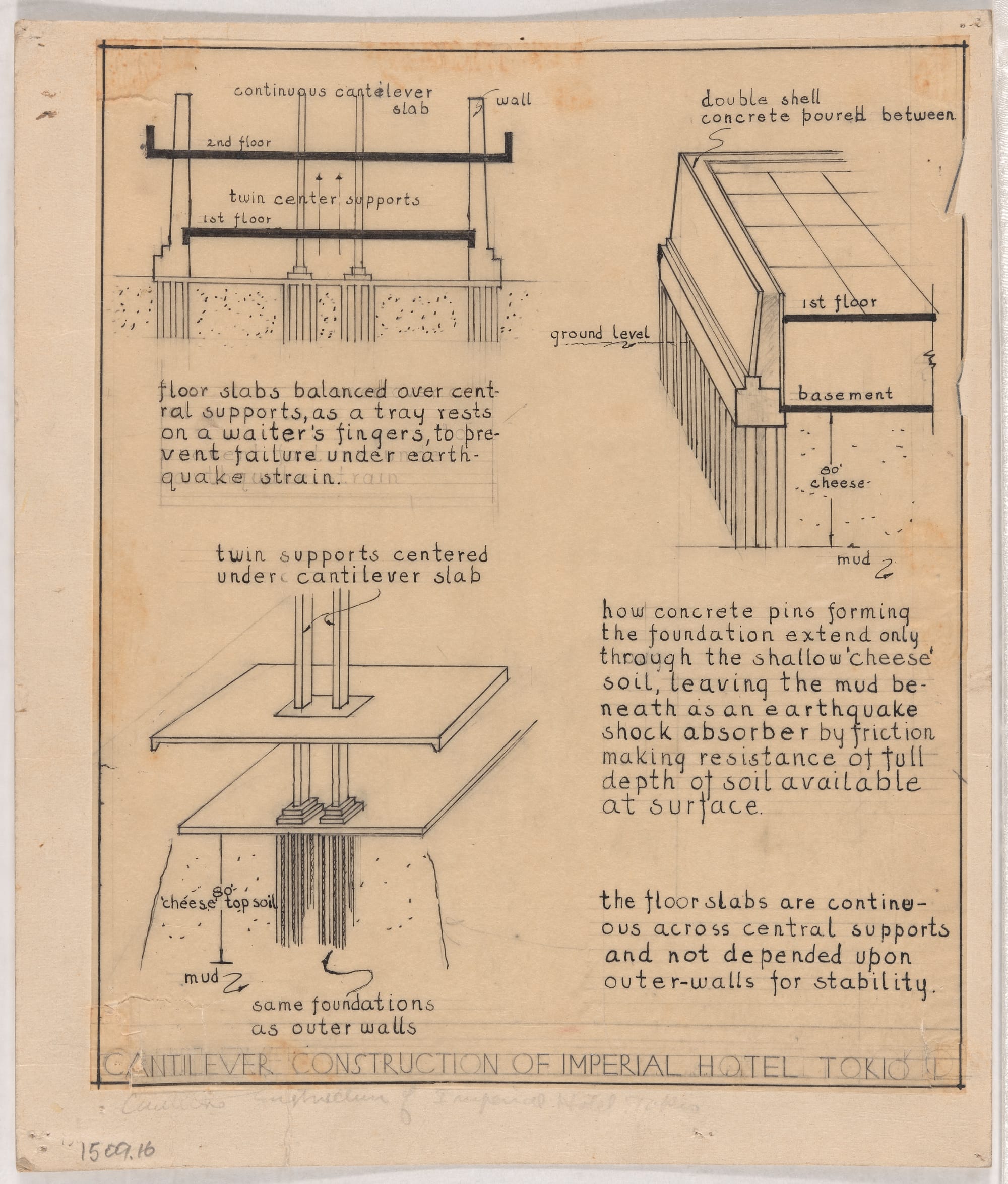
Wright also had to tread lightly, as the hotel was located just steps from the Emperor's Palace. He devised a solution, one that allowed the building to float and flex with the land rather than fight against it. When he attempted to explain this construction plan to Japanese authorities, they stopped him before he could finish. "Mr. Wright, we know that you are a famous architect. You wouldn't come here and try to build us something that would fall down," they replied. He was free to build, and while they didn't understand Wright's design, they hoped to learn from it.
On September 1, 1923, the 8.0-magnitude Great Kantō Earthquake struck the island. Wright had left Japan for the last time the year prior, and awaited the fate of the recently-completed hotel from Los Angeles, where he was working at the time. Ten days later, he received a telegram from hotel visionary Baron Okura: "HOTEL STANDS UNDAMAGED."
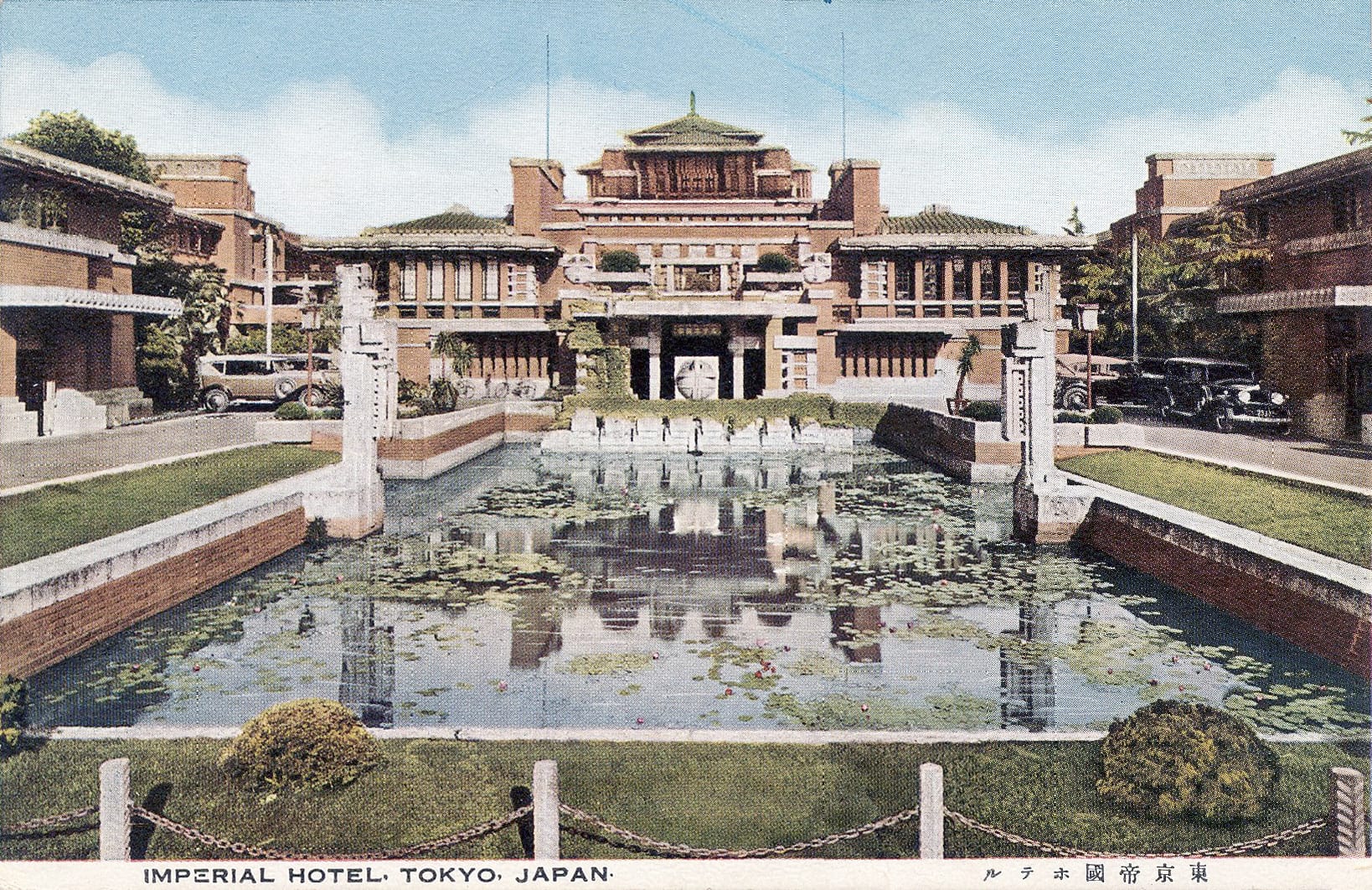
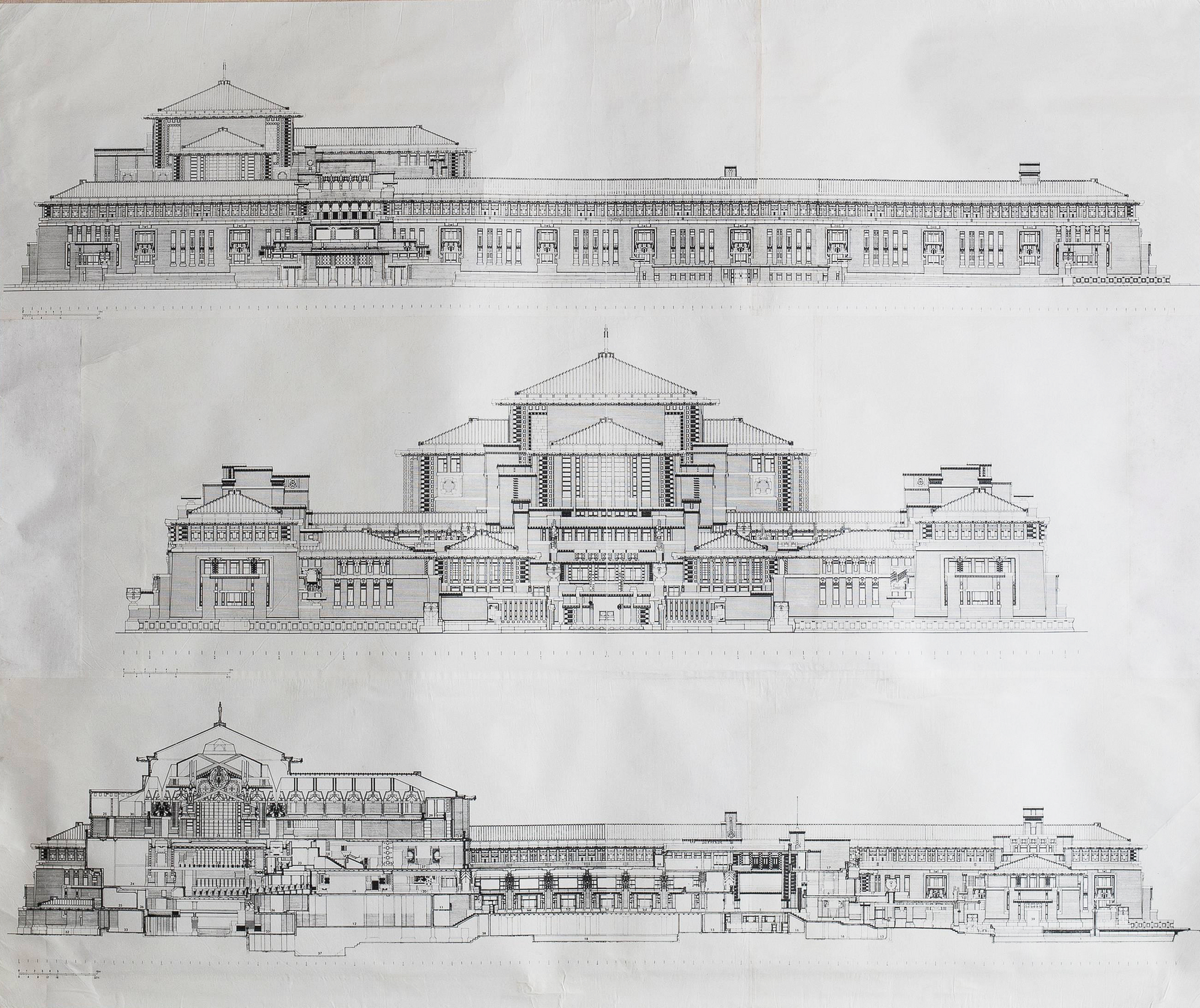
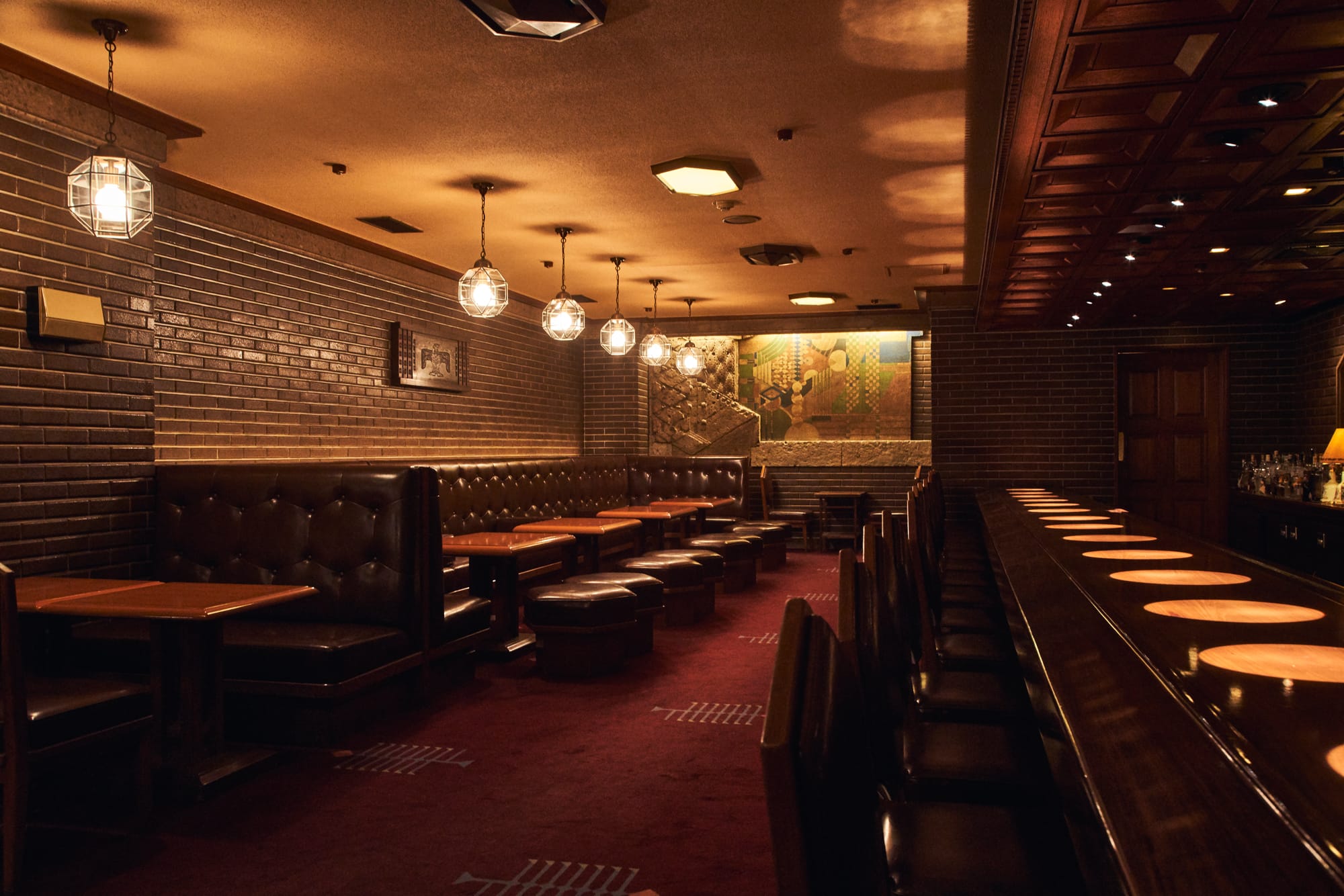
This was the state of the Imperial Hotel when Charles Hugh Alison walked through its doors for the first time in December of 1930. Much like Wright, Alison had an impressive body of work firmly established in America prior to visiting Japan, designing several highly-regarded courses, as part of the powerhouse firm Colt, Alison & Morrison, Ltd., including some just a stone's throw away from Wright buildings.
Japan presented Alison with a new challenge, an untamed land ripe with possibilities not only just for exciting golf, but also for refining and pushing the boundaries on his own creative process. As he toured Japan, he was instantly smitten with the landscape. While visiting the Kawana Hotel on the Izu Peninsula with owner Baron Okura (incidentally, the same man who notified Wright that the hotel survived the 1923 earthquake), Alison noted that "the scenery resemble[d] that of the French Riviera," only he felt that it was better.
When Alison finished his tour of Japan, he returned to Tokyo and sealed himself in a room at the Imperial Hotel, maps, notes, and sketches laid out in strict order. His stay was brief, but impactful. Working inside Frank Lloyd Wright’s masterpiece, itself an American designer’s homage to Japanese aesthetics, Alison got to work, emerging with designs that would anchor Japanese golf for decades.
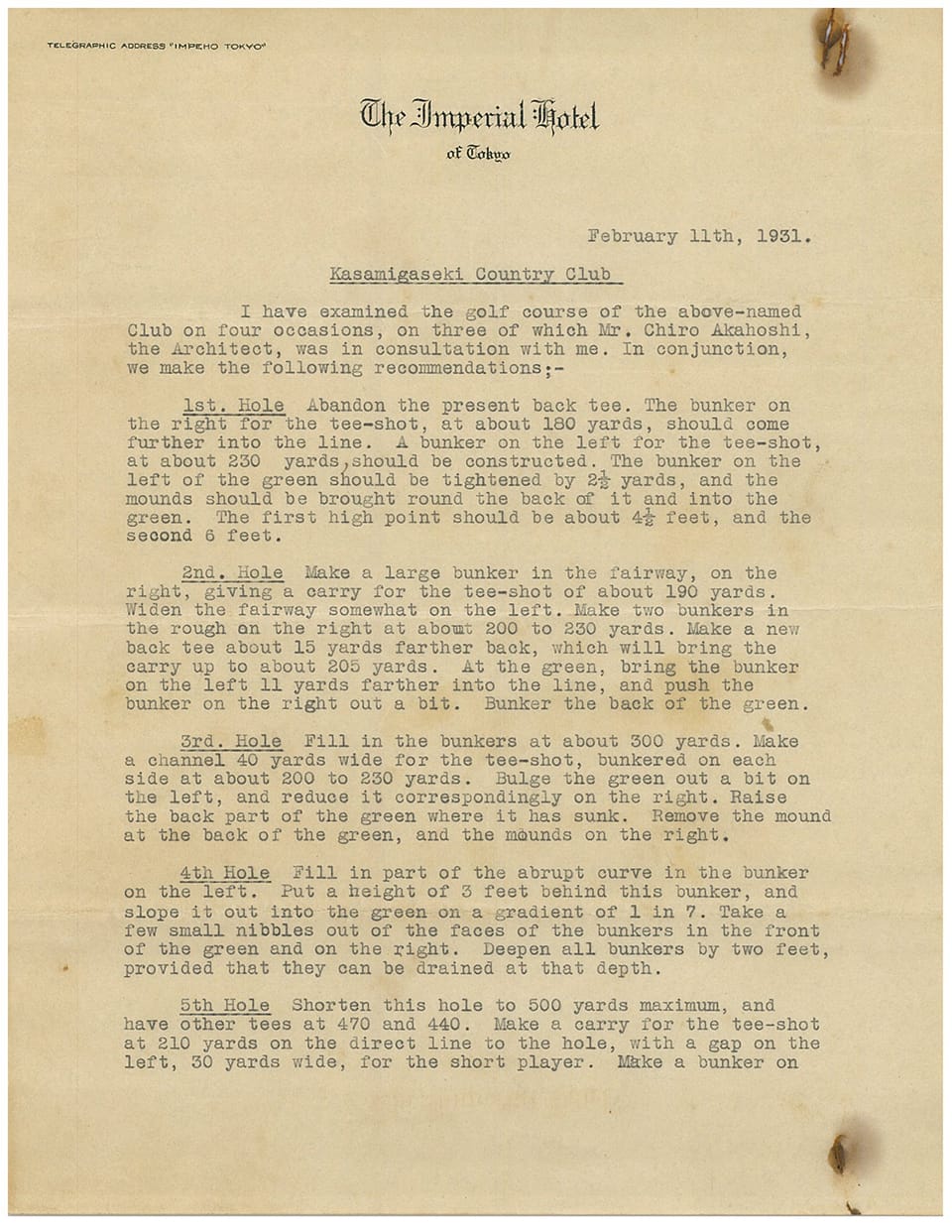
Suddenly, Tokyo Golf Club, Hirono Golf Club, and the Fuji Course at Kawana - three stalwarts of Japan golf, were fully laid out on paper. He had also toured Kasumigaseki Country Club, which had only opened for play a few months earlier, and sent the club a meticulous hole-by-hole renovation plan - all on Imperial Hotel stationery.
Wright and Alison's work both resonated in the country precisely because it honored core Japanese principles. Wright sought organic architecture—taking the understated harmony and beauty that initially sparked his love of woodblock prints and incorporating that into his designs. Alison sought organic golf—letting the land movement dictate the routing, with a clarity in his purpose that golf should be more strategic than penal.
Each showcased command of both the technical and artistic sides of their work; Wright, despite the acclaim he received for his visual artistry, was a brilliant engineer. His concrete pin system was ingenious and necessary, deftly addressing a challenge posed by Japan's unique soils. Alison, in his own way, went through a similar process. Routing a golf course on land as wild as, say, the Izu coastline could prove to be an insurmountable obstacle in the hands of a lesser architect—but Alison turned it into a strength.
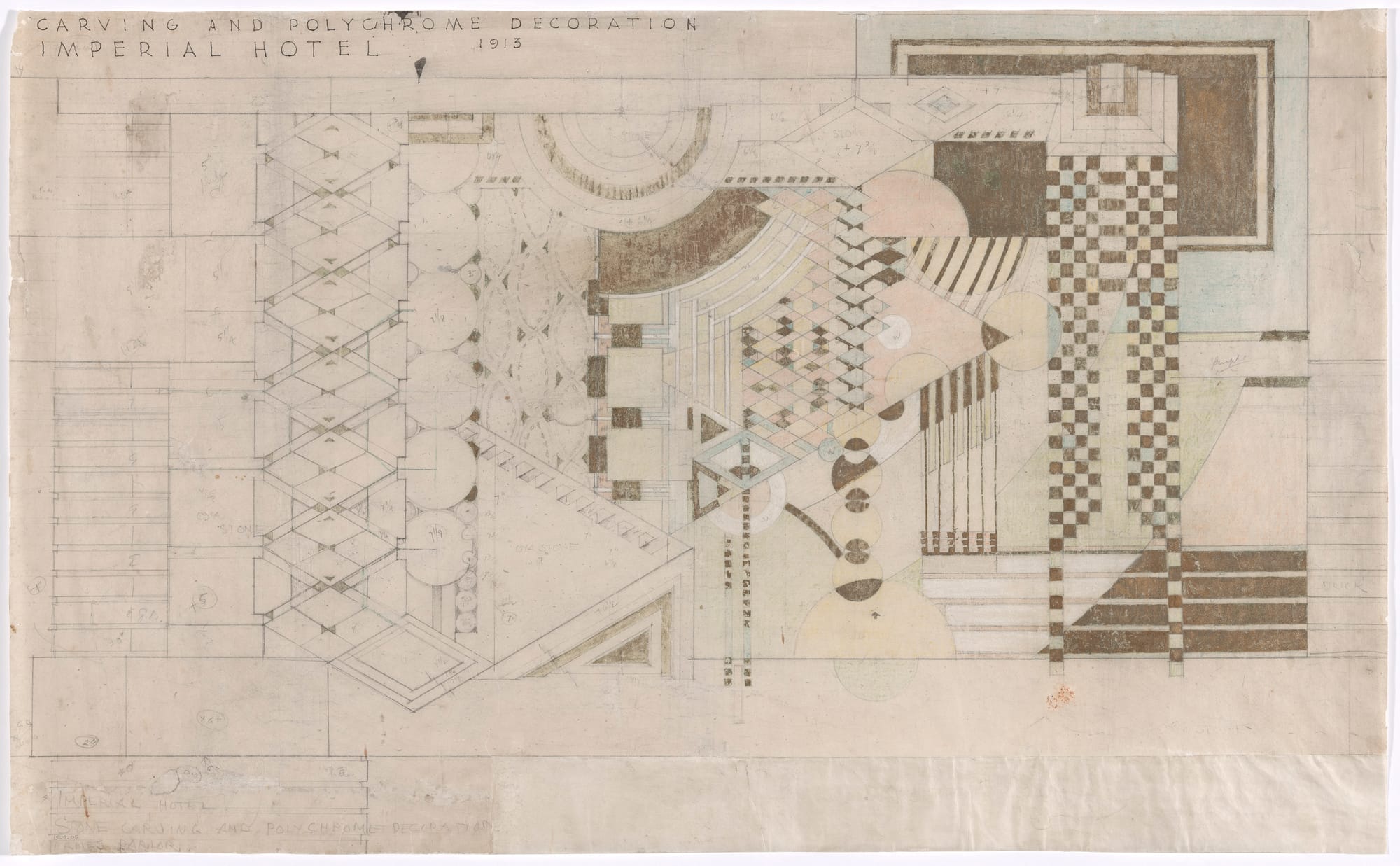
Of course, each enjoyed adding their signature flourishes to the projects, as well. Wright initially deployed his Oya stone designs with restraint, but fell in love with their beauty when he saw them carved into actual stone by Japanese craftsmen. He would go on to add significantly more to the design, including the ones now found in the Old Imperial Bar. Alison honed his artistry on bunker design, and the legendary "Alison Bunkers" —large and deep, adding a sense of scale to the land and visual intimidation for the golfer— are admired to this day across the country.
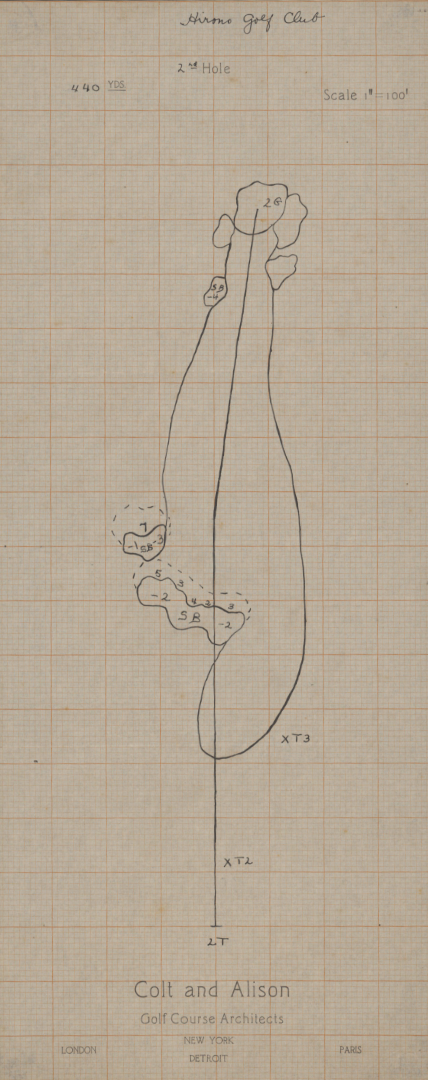
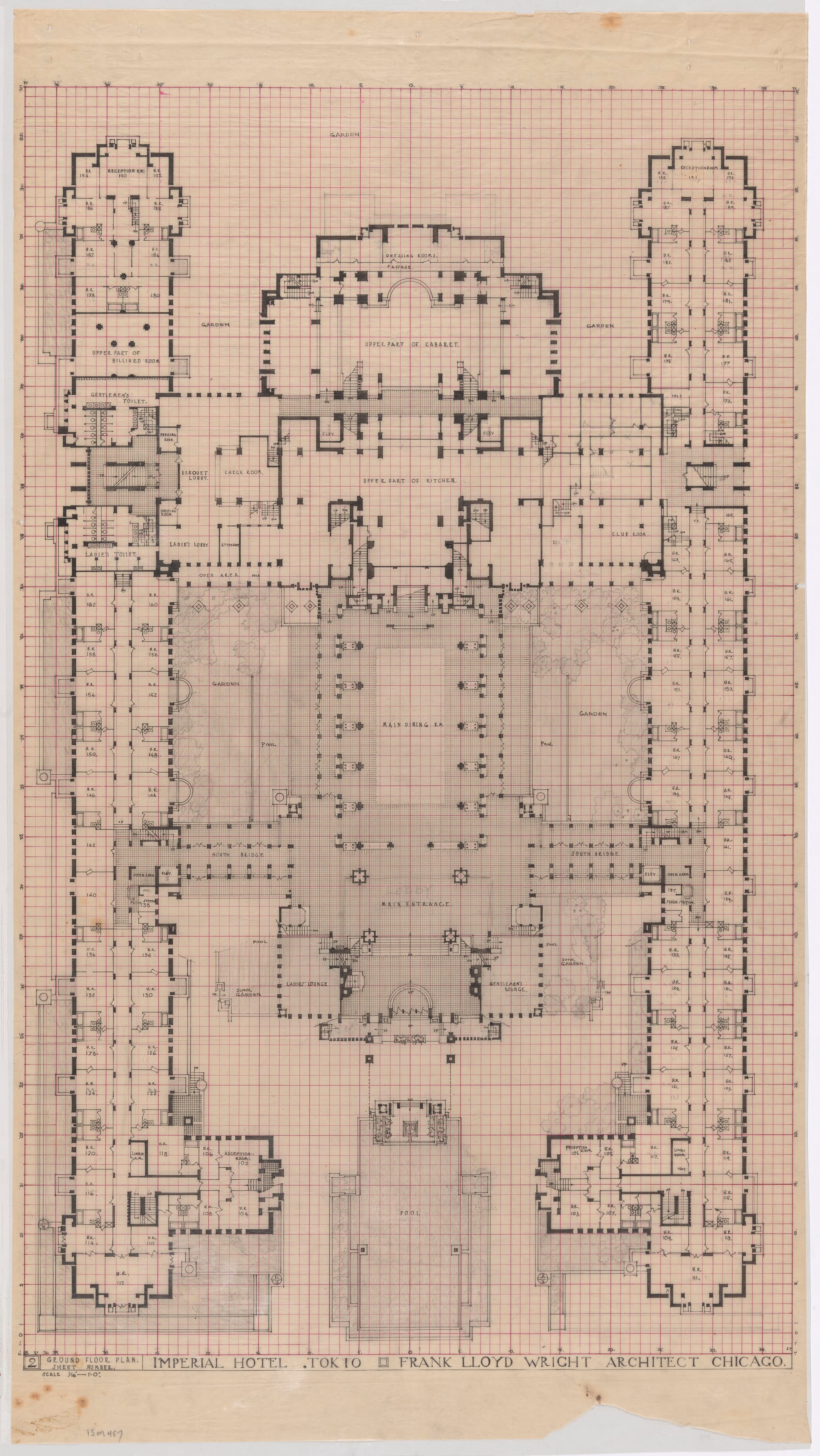
Alison's sketch of the second hole at Hirono, left, and Wright's plan for the Imperial Hotel, right. Images courtesy of Hirono Golf Club and The Frank Lloyd Wright Foundation Archives (The Museum of Modern Art | Avery Architectural & Fine Arts Library, Columbia University, New York)
Both men found in Japan a culture that valued what they valued: balance, restraint, and the quiet beauty of natural forms. When Wright writes that “the first and supreme principle of Japanese esthetics consists in a stringent simplification by elimination of the insignificant and the consequent emphasis on reality," you can just as easily picture that quote coming from Alison talking about his own design philosophy.
There is also a shared sense of history for both Alison and Wright, in that two of their respective masterpieces live on only in memory. In need of extensive repairs, Wright's Imperial Hotel was closed for good in 1967 and demolished shortly after, as modernity imposed new needs for the hotel space. His legacy carried on though, as architects like Arata Endo, Wright's right-hand man who had assisted him on the Imperial Hotel project, adapted Wright's principles into his own distinct vision to create buildings that remain part of Japan's rich architectural legacy.
Alison's version of Tokyo Golf Club was even more fleeting. The club moved locations in 1940, leaving his original work behind after just eight years. But it was one of his closest disciples, Komei Otani, who created his own masterpiece that honored Alison's vision and remains one of Japan's golfing crown jewels: a world-class golf course designed by a Japanese architect.
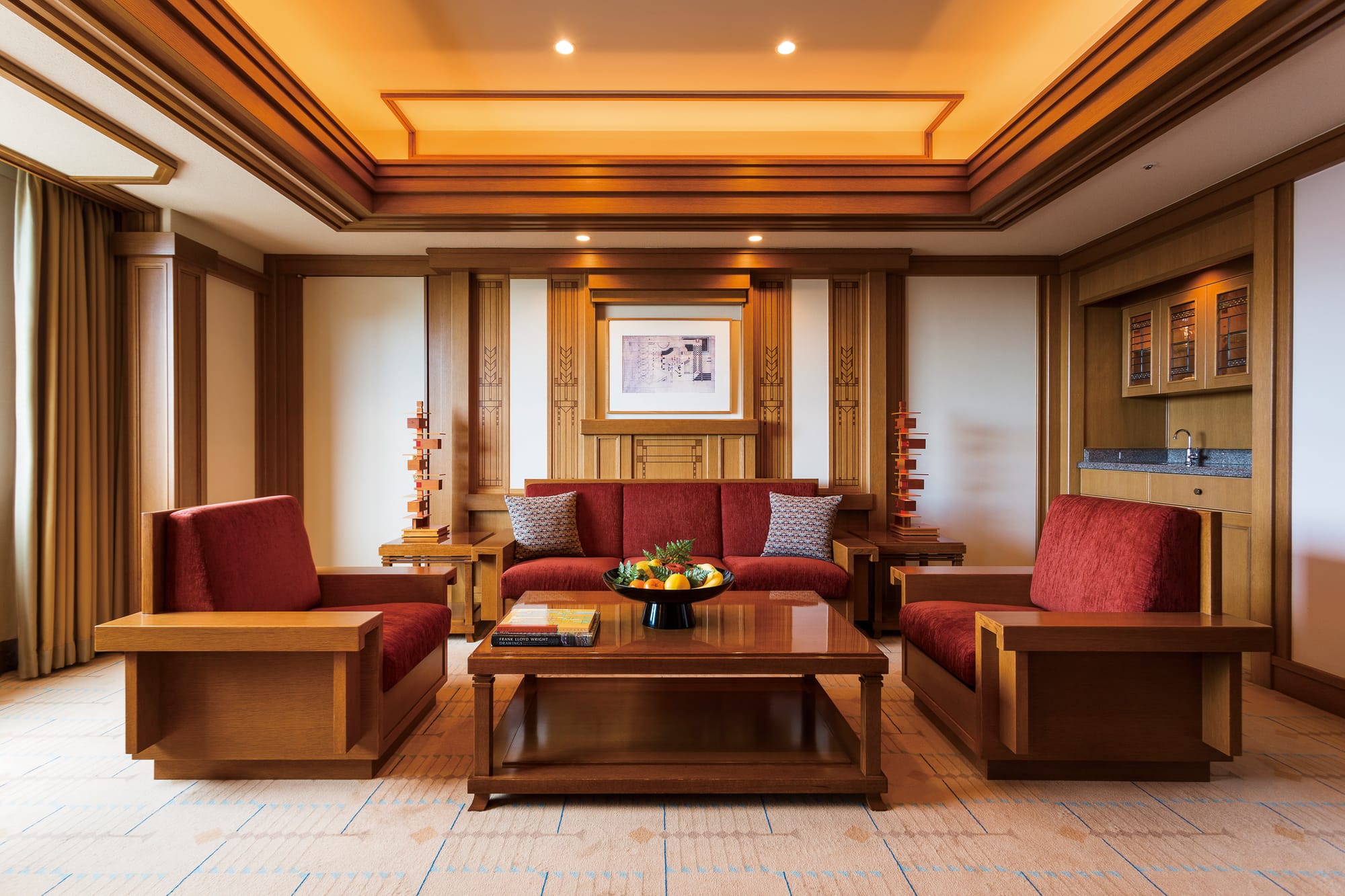
Soon, the current iteration of the Imperial Hotel will make way for the fourth version, slated to open in 2036. While it will carry the hotel through the 21st century and beyond, it will undoubtedly stay true to its original mission of being a welcoming place for travelers to experience the pinnacle of Japanese hospitality culture.
For anyone with even a passing interest in golf and design, the Imperial Hotel is a must-visit. It's almost too poetic that it sits at such an overt intersection - two architects at the height of their respective fields, finding inspiration and doing some of their most enduring work on the same ground.
Perhaps a stay in the The Frank Lloyd Wright® Suite is in order on your next visit to Tokyo. And if not, a drink at the Old Imperial Bar will do —an opportunity to raise a glass to Frank Lloyd Wright, Charles Hugh Alison, and to the spirit of creativity that still lives within those walls.
Author's note: A special thanks to the Imperial Hotel and the Frank Lloyd Wright Foundation for their support of this article.
