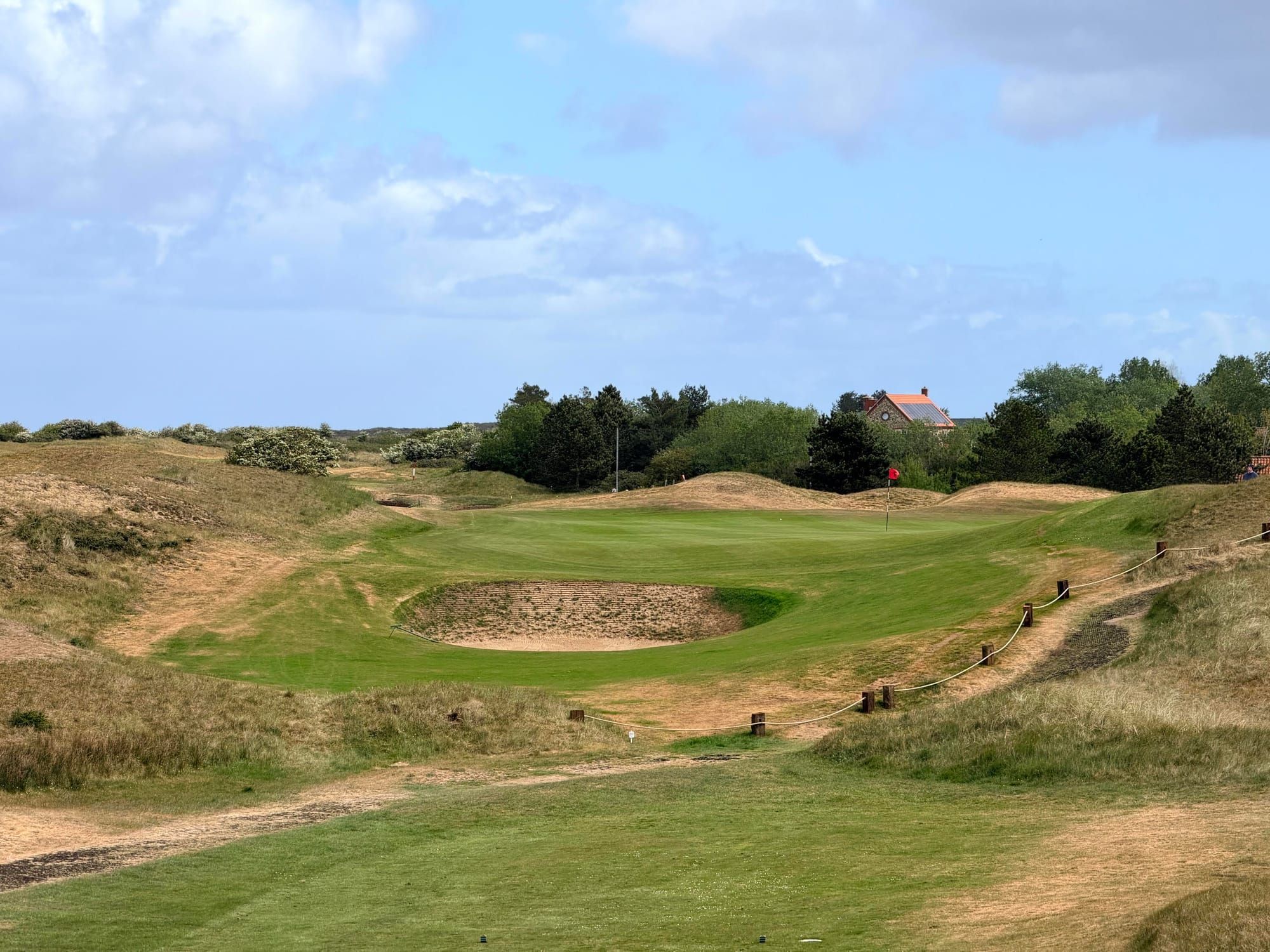
On the surface, recounting my recent experience playing in the biennial “Atlantic Match” –a contest between The Harvard & Yale Golfing Society and The Oxford & Cambridge Golfing Society– might sound as pretentious and un-relatable as listening to someone extol the virtues of the cashmere thread count of sweaters found only in the Augusta National members’ pro shop versus those of the lowly Masters general patron merch tent. Given the deep history and collective privilege of all four collegiate institutions represented in this event, it’s fair to initially assume a strong undercurrent of elitism.
It is true that a certain natural level of exclusiveness exists in the roots of these two groups – The Oxford & Cambridge Golfing Society (founded in 1898) is the oldest golfing society in the world, and comprises more than 700 members – to gain membership, one has to have earned their full “blues” (or played on the “varsity” golf team) at either university and then can represent the society as a current student or alum in a calendar of more than 40 matches they play throughout the year against clubs and other societies. Its history and traditions are rich and storied, which makes sense knowing that Oxford (c. 1096) and Cambridge (c. 1209) are the two oldest universities in the English-speaking world. By comparison, Harvard (c. 1636) and Yale (c. 1701), are much younger and consequently, the HYGS, born in flattering imitation to its English counterpart, was founded in 2022 with an aim to provide “golf for life.” Similarly, to become a member, one must have played for either Harvard or Yale’s men’s or women’s varsity golf teams. The “Atlantic Match,” as it is called, alternates between a U.K. and U.S. location every two years and recently saw its 3rd playing, this time over two days at Hunstanton Golf Club and Royal West Norfolk Golf Club, on the Norfolk Coast of eastern England.
Beyond the exclusivity in premise, however, was a pleasant discovery that the “old-school” traditions still strongly imbuing the amateur golf game, especially in the U.K., can be more egalitarian and inclusive than imagined – I grant you, these are not adjectives often associated with British society, privileged academia, nor the game of golf. That said, in the British Isles, where the approach to competitive amateur and private club golf is largely different from the better-ball money games and handicap-manipulating buffoonery that sadly dominates American recreational golf, it is much easier to find a relaxed camaraderie in the concept of a proper team match.
First off – the premise and structure of the match is pure as can be – the two societies square off over two days (36 holes played on both days) in a format of morning and afternoon “foursomes,” or in laymen’s terms: alternate shot played with a partner. For those who loyally watch the Ryder Cup and see the Europeans consistently trounce the Americans in this format, it starts to make sense knowing that alternate shot is a pillar of the British golfing tradition, whereas in the U.S., people have barely ever tried it. In our match, every game is played “off scratch” (meaning with no handicaps) with the assumption being that everyone playing was a collegiate varsity golfer at some point and should be able to hang tough without the crutch of getting shots. The simplicity and purity of this is admirable and no one dares complain. Though, I’ll be honest – even as a low single-digit golfer who can still “get it around” okay, a 320-yd driving, +5-handicap, limber-backed 20-year-old I am not – I just hoped I drew one of these types as my partner and not my opponent!
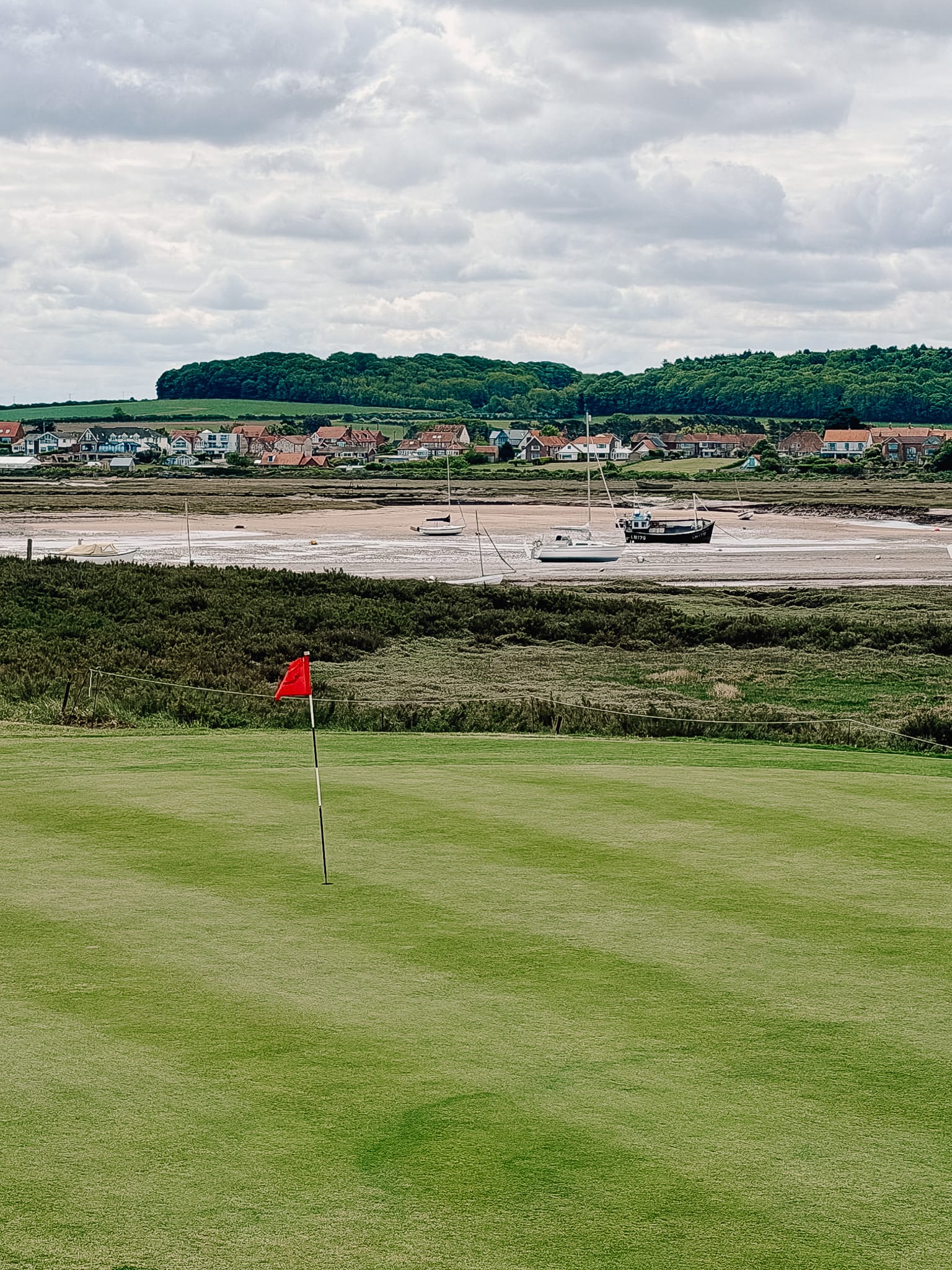
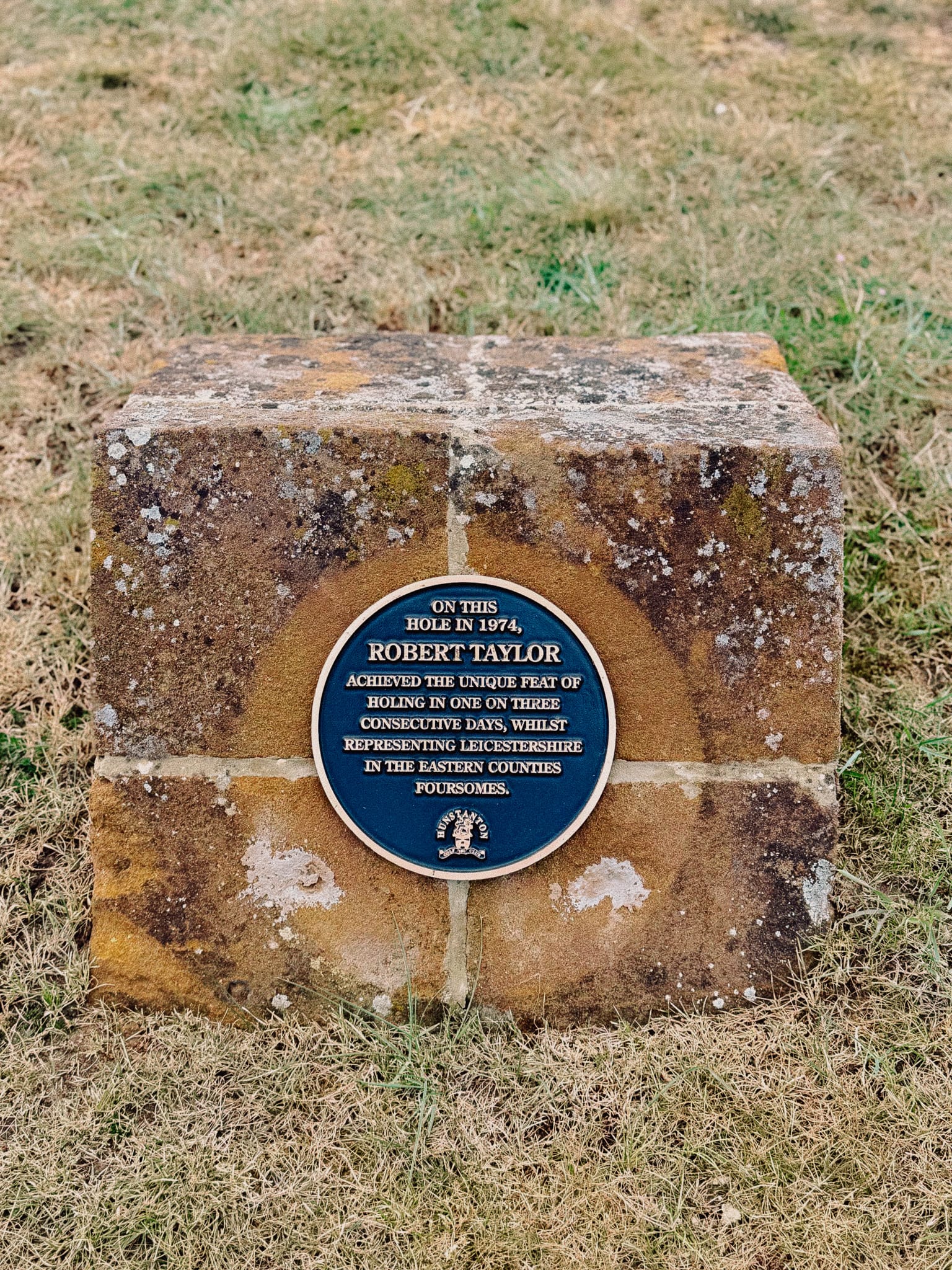
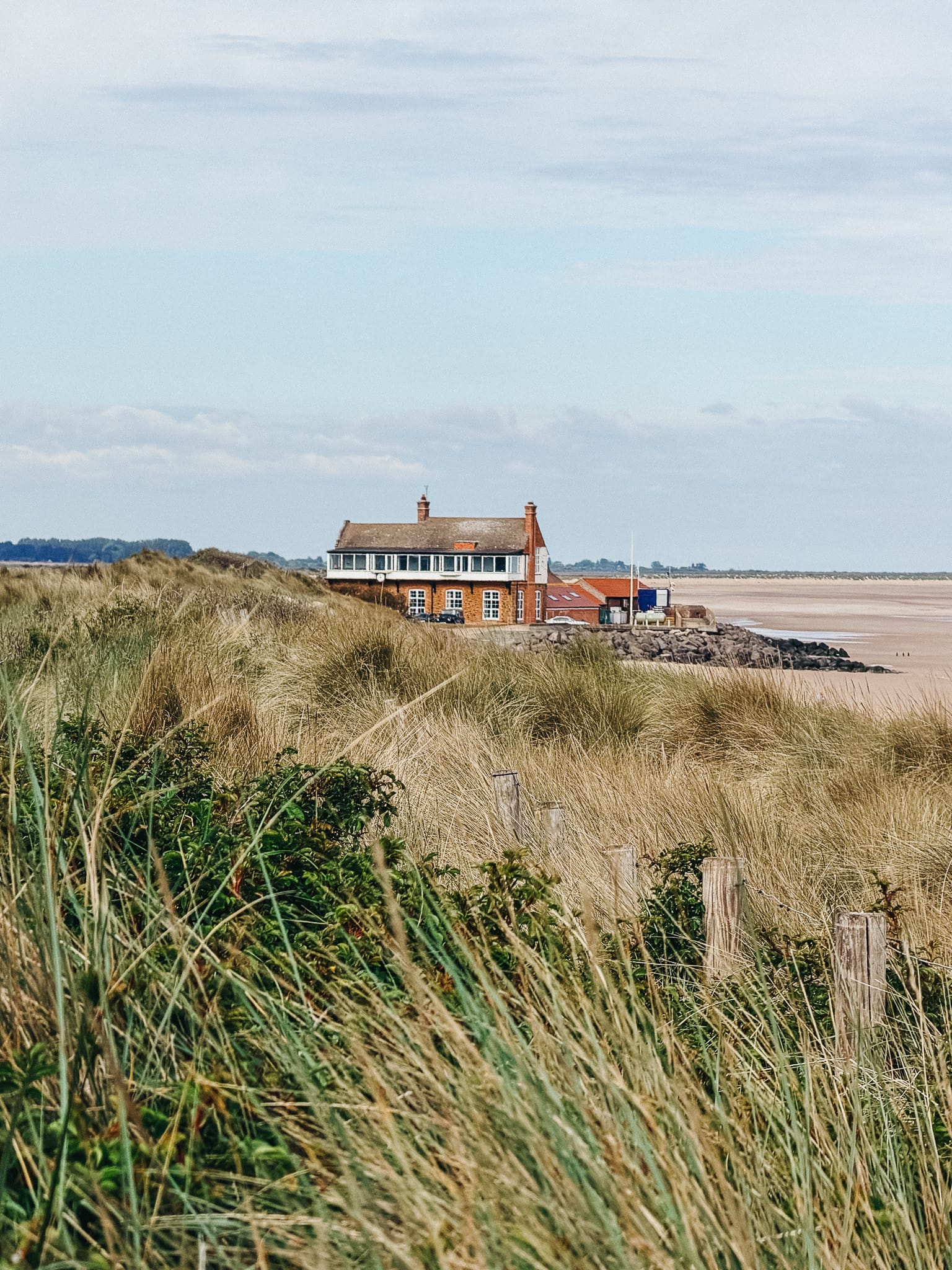
Another defining aspect of the experience is the convivial and social nature of it all – while the golf and the spirit of competition was present (for pride, not money), it is not “all about the golf” – no individual score is recorded in foursomes so there is no sense of what anyone is shooting. Good shots (or bad ones!) become anecdotes and memories to share, not stats on a sheet. The bacon rolls and coffee/tea served at breakfast to fortify for the mid-high 40’s/low 50’s temperatures and 20-30+ mph winds or the lunches breaking up the morning and afternoon rounds (complete with wine or a good pint or two) were integral to the experience. Certainly, the coat & tie evenings replete with good food (more wine, a few more pints) were every bit as much a part of the program as who was closest to what pin on a certain par-three.
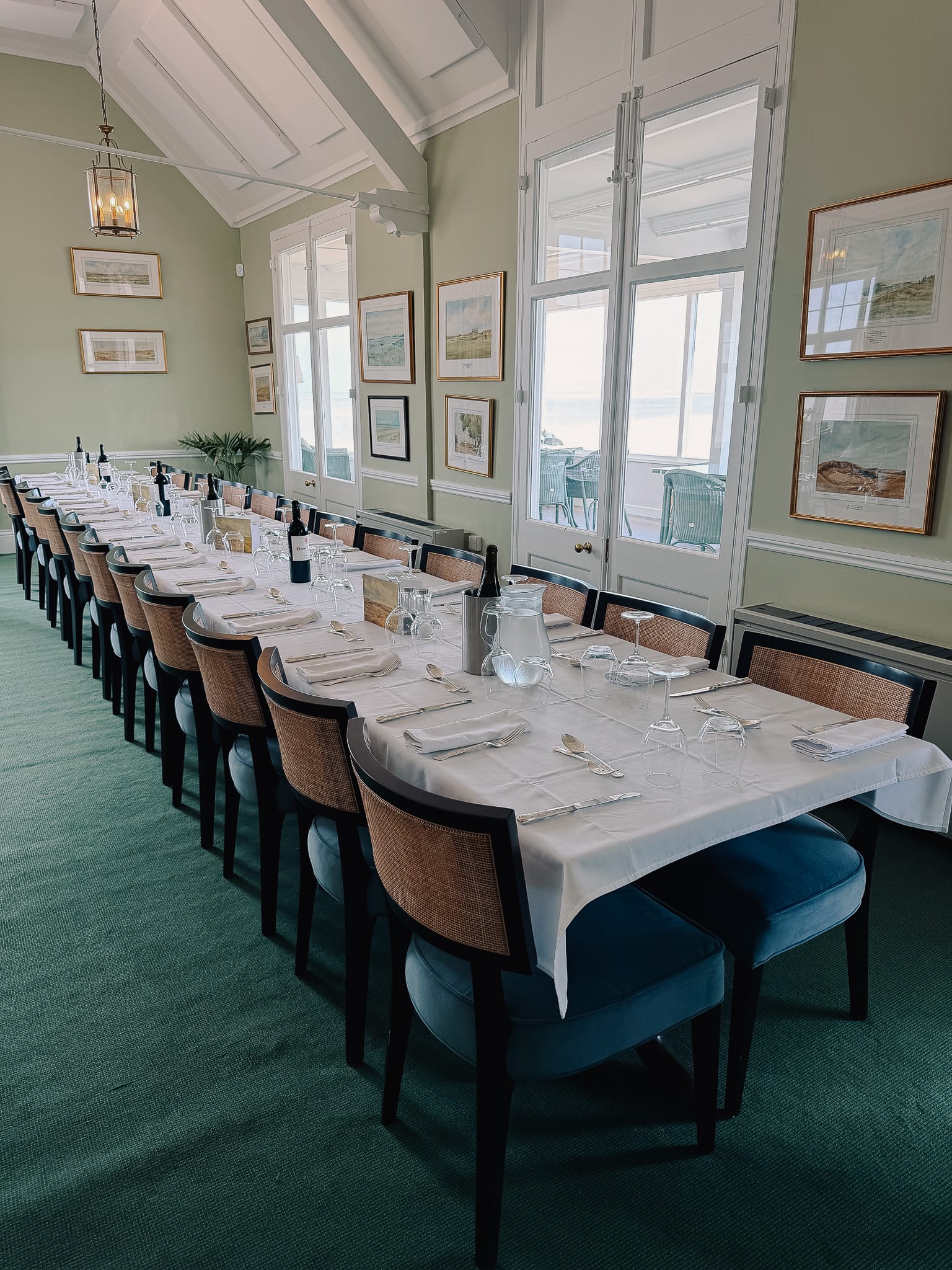
Most importantly, what I will most cherish from the experience was the easy rhythm of good sportsmanship and natural fellowship permeating the proceedings. No one made a fuss over who one’s partner (or opponent) was for a certain session. Strategy was secondary to the loftier aim of “getting on well” and having a spirited but not overly intense competition. To be sure, everyone tried their best –these are all former competitive golfers who have enough pride to want to “show up.” Great shots were congratulated and admired regardless of who made them; playing quickly, observing proper etiquette, and importantly, being able to engage in some semblance of engaging conversation while ambling down the windswept links are all qualities far more prized than ball speed or carry distance.
In a place such as this, unpretentious by nature, yet rich in tradition and lineage, it is a true pleasure to distill this genteel game into its core elements: Admiration for a fair but stern test of proper links golf, recounting local lore and those who came before; and an appropriate sense of humor about the highs and lows of this silly game we all adore. Feeling highly anglicized by the experience, I recounted a quote from the British humorist (and golf enthusiast) P.G. Wodehouse, who said:
“Golf, like the measles, should be caught young, for, if postponed to riper years, the results may be serious.”
On our last round, walking down a seaside fairway warmed by the reclusive late afternoon sun that had finally chosen to appear, I took stock of my surroundings: a rugged yet welcoming natural place which ebbs and flows with the tides, a salty maritime breeze; the pit-pat of my opponent’s well-behaved labrador retriever trotting politely down the fairway, sniffing with joy; and the happy knowledge that while the scores and stats of this match would be quick to fade from memory, the experience would persist, etched forever in our collective “serious fun.” Who wants to go again?